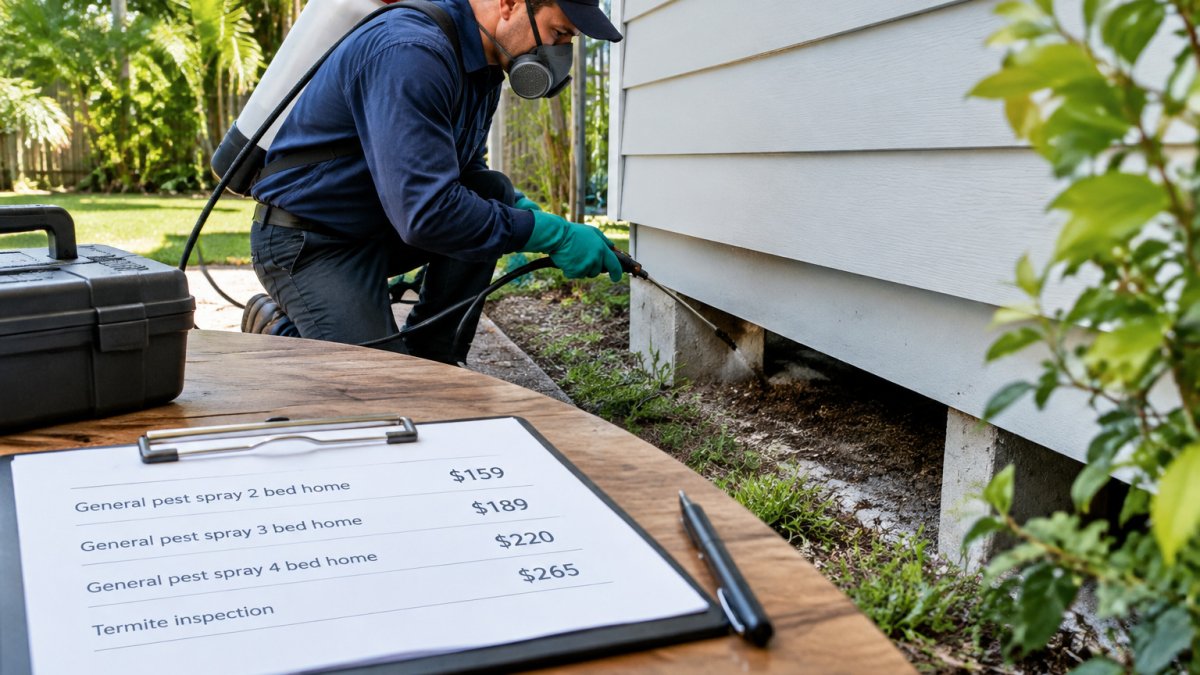
 Comparison
7 Things to Know About Residential Termite Protection
Last Updated: November 13, 2026
Quick Summary
Residential termite protection combines inspection, treatment and ongoing monitoring to keep termites away from your home's timber, and it works as a system rather than a one-off job. A barrier treats the soil and timber around the home, while a baiting system targets the colony through monitored stations.
- The inspection is the real product, because everything after it depends on finding termite risk accurately.
- Chemical barriers are not permanent and need periodic review and topping up.
- Bait stations give early warning by showing activity before damage appears in the house.
- Annual inspections are standard, with six-month checks worth considering in high-risk areas.
- Compare quotes over five or ten years, counting monitoring and retreatment, not just the first invoice.
Table of Contents
- What Residential Termite Protection Actually Involves
- Termite Barrier vs Baiting System: How the Two Approaches Differ
- Termite Protection for Existing Homes: Retrofitting and Ongoing Maintenance
- Termite Inspection Frequency: How Often Is Often Enough?
- How to Choose a Termite Control Company
- Total Cost of Ownership: What You Are Really Paying For
- Book a Termite Inspection and Get a Written Quote
- Frequently Asked Questions
What Residential Termite Protection Actually Involves
Residential termite protection is the combination of inspection, treatment and ongoing monitoring that keeps termites away from a home's timber.
The work usually breaks into four parts. A technician inspects the property, including the subfloor, wall cavities, roof space and any timber in contact with soil. Then comes a treatment or barrier, followed by monitoring and annual inspections. Documentation matters too: a written report and treatment record tell you what was done and when it needs revisiting.
What most guides miss is that the inspection is the real product. Everything after it depends on finding the termite risk accurately.
If you want to see how a full inspection and treatment service runs, you can book a termite inspection with our team.
Termite Barrier vs Baiting System: How the Two Approaches Differ
A termite barrier vs baiting system question comes down to this: a barrier blocks or treats the soil and timber around the home, while a baiting system lures foraging termites to monitored stations and uses them to reach the colony. For a closer look at how the options stack up, see our termite treatment options comparison.
Australian consumer guidance names chemical barriers and in-ground baiting as two of the most common treatment options, without ranking one above the other (EXTERNAL_LINK: Inspect My Home's termite treatment comparison | inspectmyhome.com.au) (Which Termite Treatment Is the Most Effective?).
Here is the practical difference:
| Method | How it works | Strength | Limitation |
|---|---|---|---|
| Chemical barrier | Liquid termiticide applied to soil or footings | Creates a treated zone termites must cross | Needs periodic review and topping up |
| Baiting system | Bait stations in the ground, checked on a schedule | Targets the colony through worker termites | Depends on stations being serviced on time |
| Wood treatment | Borate or spray applied to timber | Protects exposed or vulnerable timber | Does not treat the soil around the home |
Chemical Barriers and Liquid Termiticides
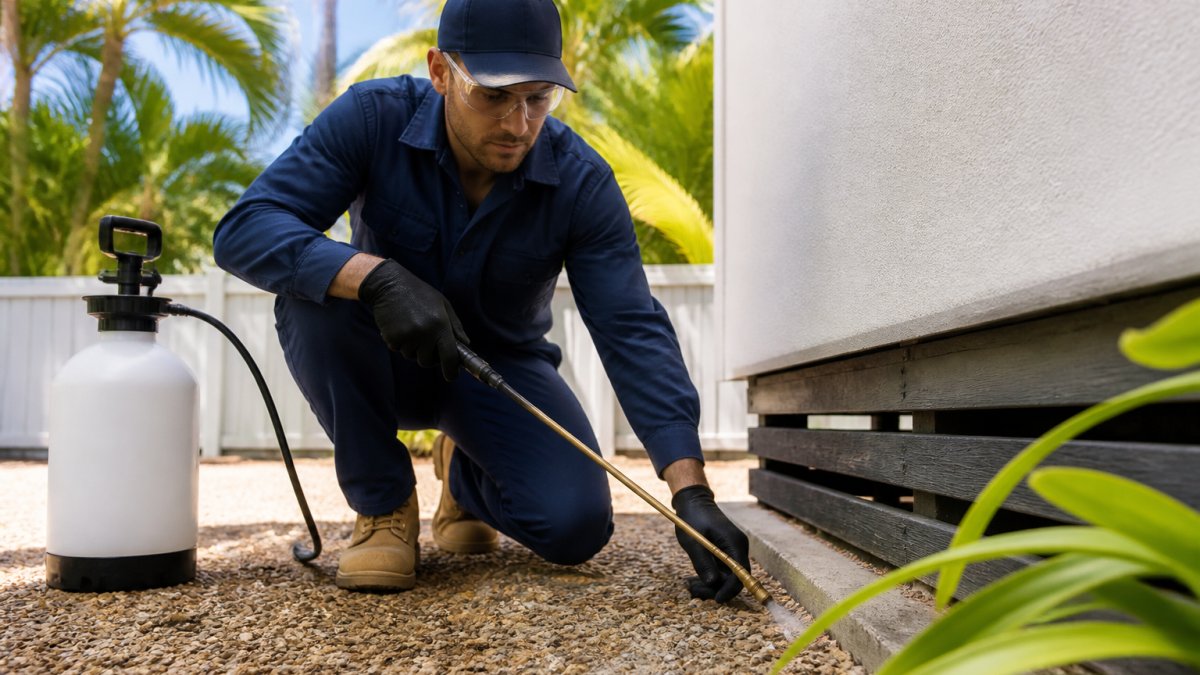
Liquid termiticides are applied to the soil beneath and around a home, forming a treated zone that termites pass through and pick up the active ingredient. The barrier's life depends on soil conditions, drainage and how well it was installed, so installation quality matters more than the label. Sandy, free-draining soils and sites with heavy runoff tend to shorten service life; clay soils that hold moisture can behave differently again. A common mistake is assuming a barrier is permanent. It is not.
In-Ground Baiting Systems and Bait Stations
Bait stations sit in the soil around the perimeter and are checked at set intervals. When termites enter, the station is baited so worker termites carry the material back to the colony. The system only works if checks happen on schedule, which is why servicing discipline matters more than the hardware. A baiting system also gives you an early-warning function: stations that show activity tell you termites are present before damage appears in the house, which is useful on properties with a history of activity or dense surrounding vegetation.
Choosing Between Them by Property Type
A practical decision framework looks like this:
- Existing home on a concrete slab, no prior activity: a chemical barrier along the perimeter and any penetrations is often the simpler starting point, paired with annual inspections.
- Existing home on stumps or with a suspended floor: access under the floor makes both options viable; baiting adds early detection, while a barrier protects the soil line and stumps.
- Home with previous termite activity: baiting is commonly favoured because it targets the colony and provides ongoing monitoring, usually alongside corrective timber work.
- New build or renovation: barrier installation is easiest before slabs and landscaping go in, and records from that stage are worth keeping.
- High-risk block (dense vegetation, poor drainage, known pressure): a combined approach, barrier plus monitored stations, is a common pattern among practitioners, with inspections at shorter intervals.
Watch out: choosing a system because it is cheapest on the first invoice, then skipping the monitoring visits it depends on, is the most common way either method underperforms. The system is only as good as the schedule behind it.
Compliance and Documentation
Whichever route you take, ask for the installation record, the product name and active ingredient, the treated zone or station map, and the inspection report. These documents matter if you sell the property, if a warranty claim arises, or if a later tradesperson disturbs the treated area. Requirements can vary between states and territories, so confirm the local rules before relying on any treatment as a disclosure item.
Termite Protection for Existing Homes: Retrofitting and Ongoing Maintenance
Retrofitting protection to an existing home is normal, and it usually starts with finding the weak points: timber touching soil, poor drainage, blocked subfloor ventilation and damp wall cavities. Those conditions invite termite activity, so fixing them is part of the treatment.
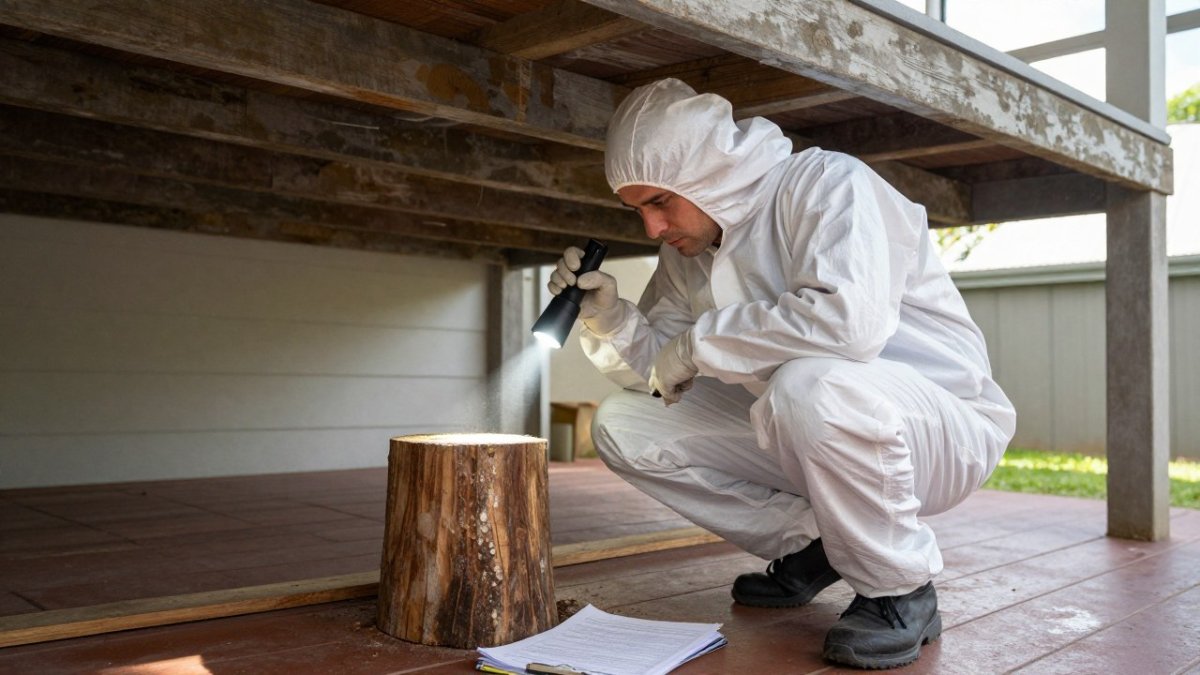
Watch out: skipping the moisture and drainage work and relying on the treatment alone is the most common way a retrofit underperforms. Termites follow moisture, and a wet subfloor keeps drawing them back.
Termite Inspection Frequency: How Often Is Often Enough?
Annual is the standard answer for most homes, and in high-risk areas a six-month check is worth considering. Termite inspection frequency should follow the risk of the property, not a fixed calendar the company finds convenient.
Homes with previous termite activity, older timber construction, poor drainage or dense surrounding vegetation carry more risk. So do homes with no barrier record. A dedicated look at why annual termite inspections matter here explains the local reasoning in more depth.
How to Choose a Termite Control Company
Choosing a termite control company comes down to four checks: a current licence, a written scope of works, a clear warranty with retreatment terms, and a local operator who can return when something goes wrong. Ask for all four before you compare quotes.
Questions worth putting to any provider:
- What is your licence number, and what does the treatment cover?
- What exactly does the written quote include and exclude?
- What are the warranty terms and who pays for a retreatment?
- How often are inspections and monitoring included?
- Who answers the phone if termites turn up between visits?
Our guide to choosing local pest control that works sets out the five questions we would ask, and the comparison of what a treatment quote should itemise is worth reading before you book.
The review of termite control methods published in 2022 shows how much treatment approaches have changed over time, and why the paperwork behind a treatment matters as much as the chemical (EXTERNAL_LINK: A Review of the Evolution of Termite Control | pmc.ncbi.nlm.nih.gov).
Total Cost of Ownership: What You Are Really Paying For
Total cost of ownership covers the inspection, the treatment, the monitoring visits and any retreatment over the life of the system. A cheap initial quote with no monitoring built in usually costs more across several years than a complete package, but the only way to see that is to compare quotes on the same basis over the same period.
The Cost Lines That Actually Matter
Put these side by side when you compare quotes:
- Inspection fee, a full inspection, not a quick walk-around.
- Treatment cost, itemised by method, area treated and product.
- Monitoring visits, how many per year, and whether they are included or billed separately.
- Bait replenishment, for baiting systems, how often stations are recharged and who pays.
- Retreatment terms, what triggers a free retreatment and what voids it.
- Warranty length and scope, what is covered, for how long, and what the exclusions are.
A quote that itemises each line is easier to judge than a single lump sum. For a breakdown of what a quote should cover, see what termite treatment cost really covers.
Warranty Terms and Retreatment Responsibilities
Warranties on termite work are rarely unconditional. Most practitioners structure them around a few common conditions: the owner keeps up the scheduled inspections, the treated zone is not disturbed, and any moisture or drainage problems identified in the report are addressed. Miss an inspection or pave over a treated strip, and the warranty can be voided, sometimes without the owner realising until a claim is made.
Ask specifically:
- What does the warranty cover, retreatment only, or repair of damage as well?
- How long does it run, and does it renew with each paid inspection?
- Who pays for retreatment if activity is found inside the warranty period?
- What actions by the owner void it?
Get the answers in writing. A verbal assurance is not a warranty term.
Service Life and Maintenance by System
A barrier and a baiting system have different ongoing costs, so compare them over the same period rather than on the first invoice. Chemical barriers typically need review and topping up at intervals set by the product label and site conditions; baiting systems need stations checked and recharged on a schedule, with more frequent visits in high-pressure areas. Neither is maintenance-free, and the maintenance is where most of the multi-year cost sits.
A Simple Comparison Method
Take each quote and total: inspection + treatment + (annual monitoring × number of years you intend to stay) + expected retreatment. Then check what the warranty actually covers over that same period. The quote that looks cheapest on day one is often not the cheapest across five or ten years once monitoring and retreatment responsibilities are counted.
Watch out: a warranty that depends on inspections you did not know were billable is not really a warranty, confirm what is included before you sign.
Book a Termite Inspection and Get a Written Quote
Missed inspections are a common reason termite problems go unnoticed. If you have not had the property checked in the last twelve months, book it now rather than after you find damage.
Tropic Shield Pest Services sends licensed technicians who work with eco-conscious treatments suited to the tropical climate.
Get started with Tropic Shield Pest Services and get a written quote before you commit.
Frequently Asked Questions
What are the main options for residential termite protection?
The two most common approaches are chemical barriers, where a liquid termiticide is applied to the soil around and under the home, and in-ground baiting systems, where bait stations are installed in the yard and monitored regularly. Wood treatments such as borate products also play a role, particularly in new construction and renovations where timber can be pre-treated before it goes in. Many homes combine methods rather than relying on one.
How do termite barriers and baiting systems differ?
A chemical barrier works as a treated zone in the soil that termites encounter as they move toward the structure, while a baiting system places stations around the property that worker termites carry bait back to the colony. Barriers are installed once and generally need periodic topping up or re-treatment; bait stations need checking on a set schedule. The choice often comes down to construction type, soil conditions and how much ongoing monitoring you want. Ask a provider to explain which suits your property and why.
How often should a home have a termite inspection?
Annual inspections are the common baseline for most homes, with more frequent checks recommended in high-risk situations such as homes with previous termite activity, lots of timber-to-soil contact, or poor drainage. Ask your provider to put the recommended schedule in writing so you know exactly what is due and when.
What should I check when comparing termite protection providers?
Confirm the technicians are licensed, ask what treatment methods they use and why, and get the scope of work in writing before anything starts. Check what the warranty or guarantee covers, how long it runs, and what your responsibilities are (such as not disturbing the treated zone or missing inspections). Ask whether inspections and re-treatments are included or billed separately, and request a written quote rather than a verbal estimate so there are no surprises.
Does a termite treatment guarantee a home will remain termite-free?
No treatment can promise a home will never see termites again. What a treatment does is reduce risk and, with regular inspections, catch activity early. Treat any guarantee as a set of defined terms, and read what is and is not covered before you sign.