 blog
Eco-Friendly Pest Control: Safe for Homes and Pets
Last Updated: November 2, 2026
Quick Summary
Eco-friendly pest control for residential homes means managing pests with the least toxic method that still solves the problem, starting with inspection and prevention before any chemical is applied. Licensed technicians identify the species, find entry points, and treat only the areas that matter, often using a fraction of the active ingredient a full perimeter spray would.
- Eco-friendly treatments identify the species and treat only the areas that matter, rather than spraying all surfaces.
- Essential oils repel ants and spiders but fade within days in humid conditions and do nothing to the colony.
- Diatomaceous earth stops working once it absorbs moisture, which happens fast in a steamy kitchen or bathroom.
- If activity continues after two to three weeks of sanitation and exclusion, book a professional assessment.
- Seal entry points only after treating an active infestation, or pests can be trapped inside the wall cavity.
Table of Contents
- Eco-Friendly Pest Control for Residential Homes: What It Actually Involves
- Natural Pest Control for Homes: What Works and What Doesn't
- Pet-Safe Pest Control: Protecting Children, Pets and Pregnant Women
- Integrated Pest Management: A Plan for Your Whole Property
- Natural Ant Control and Species-Specific Treatment Choices
- Book a Property Assessment with Tropic Shield Pest Services
- Frequently Asked Questions
Eco-Friendly Pest Control for Residential Homes: What It Actually Involves
Eco-friendly pest control for residential homes means managing pests with the least toxic method that still solves the problem, starting with inspection and prevention before any chemical is applied. You can see the general pest control Port Douglas homes trust for ants, cockroaches, spiders, fleas and ticks. At Tropic Shield Pest Services, we build our treatments around that principle. Our licensed technicians work in a tropical climate where ants, cockroaches and rodents can return quickly if only spraying is used.
How eco-friendly treatments differ from conventional sprays
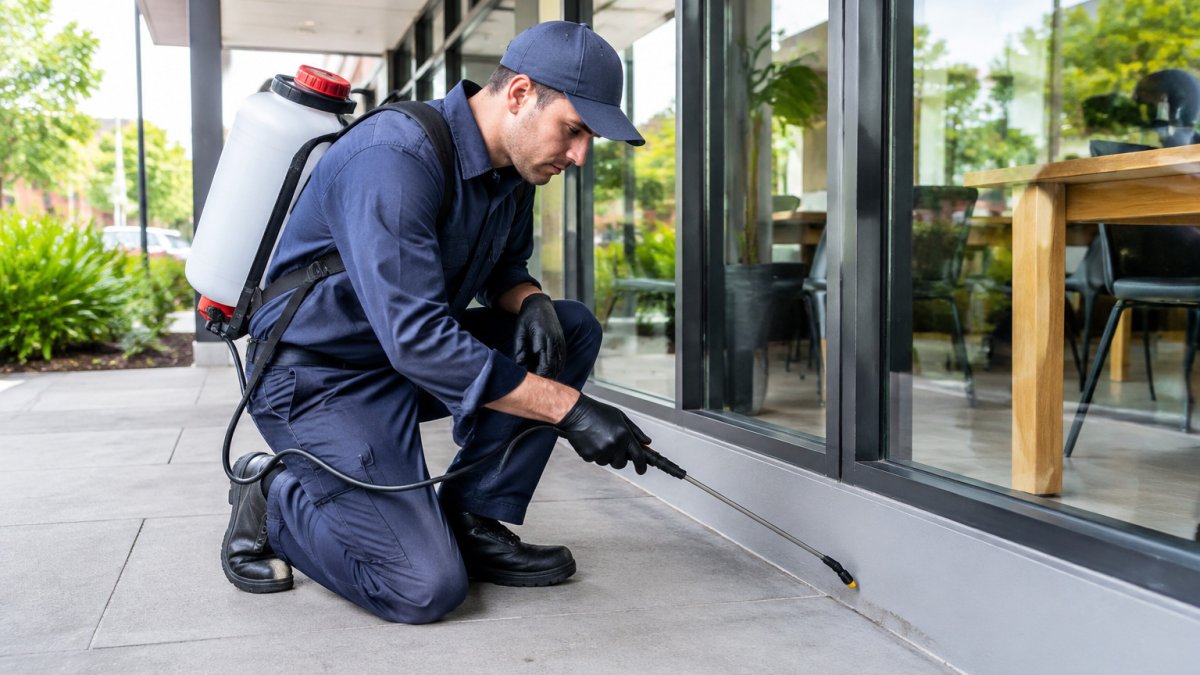
Conventional sprays often rely on broad chemical application across surfaces. Eco-friendly treatments work differently: we identify the species, find the entry points, and treat only the areas that matter. Integrated Pest Management (IPM) Principles describes this as combining pest knowledge with control methods to manage damage safely and economically.
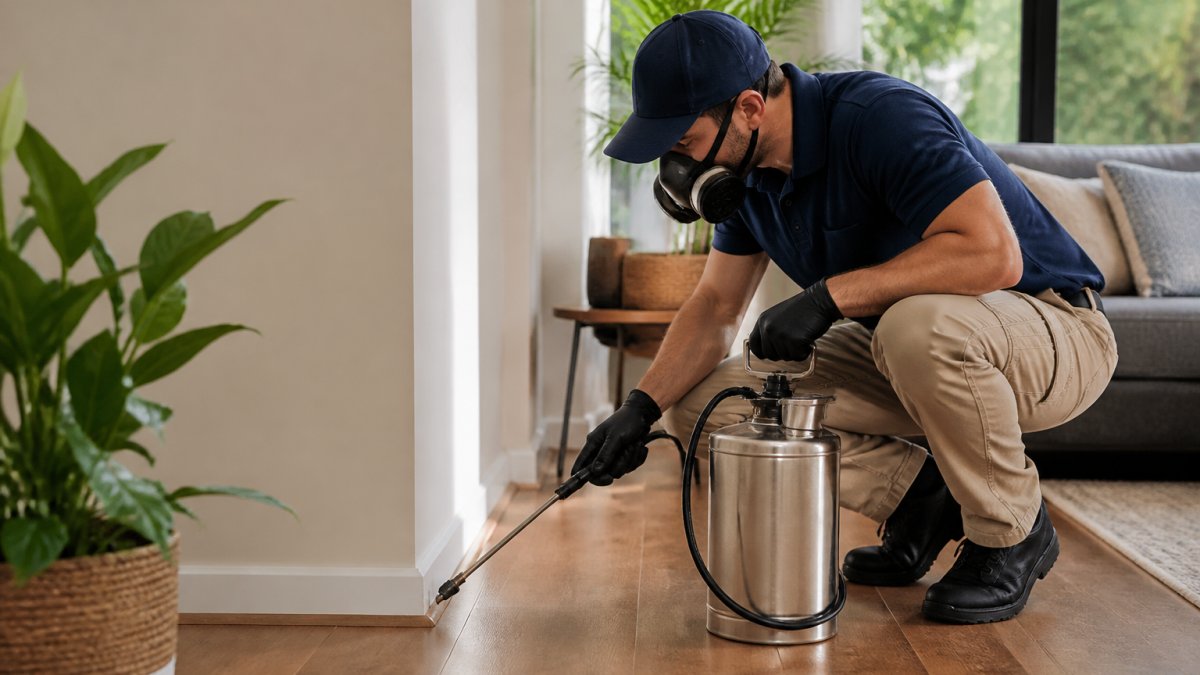
The practical difference is scale. A targeted gel bait behind a kitchen splashback uses a fraction of the active ingredient a full perimeter spray would. Our general spray pricing is $159 for two bedrooms, $189 for three, and $220 for four.
Natural Pest Control for Homes: What Works and What Doesn't
Natural pest control for homes works best when it combines several methods rather than relying on one remedy. Natural Pest Control: 3 Eco-Friendly Solutions That Really Work groups these into repellents, plants and biological controls. The honest caveat is that "natural" does not automatically mean harmless, some essential oils are irritants, and diatomaceous earth is a respiratory irritant if inhaled. What matters is matching the method to the pest and the location.
Here is how the common options actually compare:
| Method | Works well for | Limits |
|---|---|---|
| Essential oils (peppermint, tea tree, lavender) | Mild repellency, small areas | Fades quickly in humidity; no residual kill; can irritate skin and eyes |
| Diatomaceous earth | Ant trails, cockroach harbourage | Needs dry conditions; slow acting; respiratory irritant when airborne |
| Physical barriers and sealing | Long-term exclusion | No effect on pests already inside |
| Non-toxic and humane traps | Rodents, monitoring | Requires correct placement and checking |
| Boric acid and gel baits | Ants, cockroaches | Must be kept away from children and pets; slow acting |
| Biological controls (beneficial nematodes) | Soil-dwelling larvae, garden pests | Sensitive to heat, UV and dry soil |
Essential oils, diatomaceous earth and physical barriers compared
Essential oils and diatomaceous earth are useful supporting tools, not standalone solutions. Peppermint and tea tree oils repel ants and spiders along a trail, but the effect fades within days in humid conditions and does nothing to the colony behind the wall.
In practice, a common mistake is treating a visible ant trail with peppermint oil and expecting the colony to collapse. It won't. Sealing entry points and correcting moisture does more for long-term control than any single natural repellent. Boric acid baits can be used against ants and cockroaches, but they must be placed where children and pets cannot reach them.
Watch out: mixing several home remedies at once, oils, powders and baits in the same area, can repel the very insects you are trying to bait, so pick one approach and give it time to work.
What eco-friendly actually means in practice
Eco-friendly is not a single product category. It is a spectrum from physical exclusion and sanitation at one end, through low-toxicity baits and targeted gels, to conventional residual sprays at the other. Most practitioners find that the safest effective approach for a household is to start at the low-toxicity end, confirm with monitoring whether the problem is resolving, and escalate only if it is not. A targeted gel bait behind a kitchen splashback uses a fraction of the active ingredient a full perimeter spray would, and it is often more effective against cockroaches because it exploits their own foraging behaviour.
The trade-off is time. Low-toxicity methods usually act more slowly and may need repeat application, whereas a conventional residual spray gives a faster knockdown but applies more chemical across more surface area. Neither is universally better, the right choice depends on the species, the severity and who lives in the home.
Pet-Safe Pest Control: Protecting Children, Pets and Pregnant Women
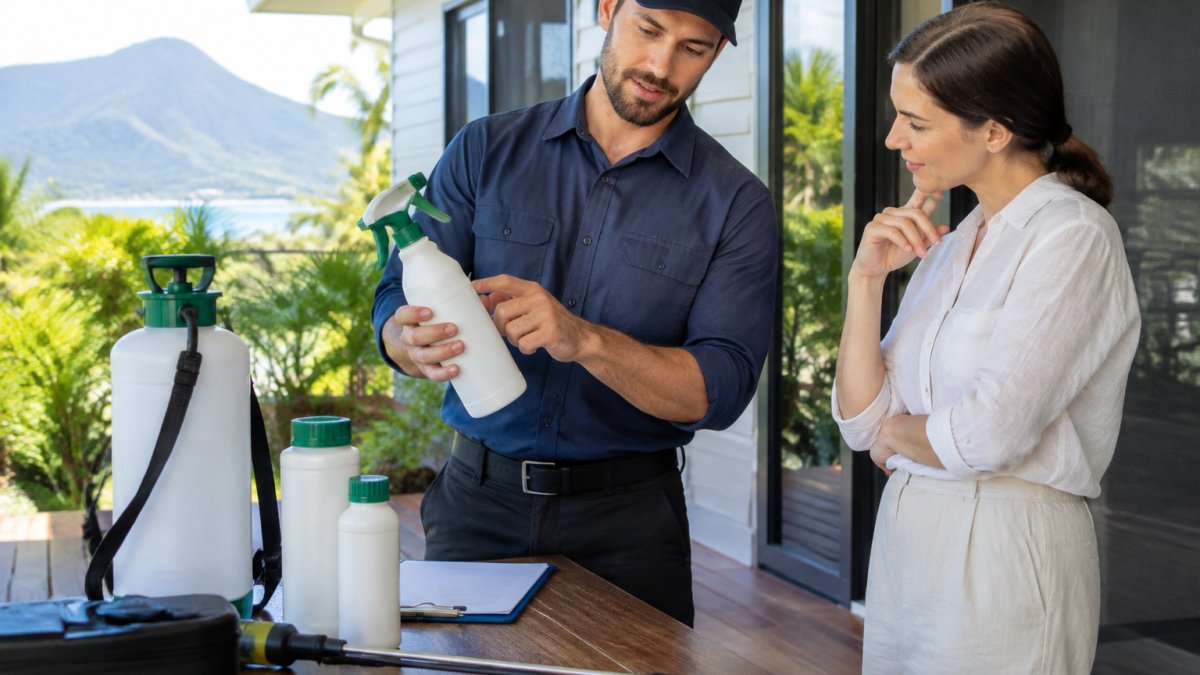
Pet-safe pest control means choosing low-toxicity products, applying them precisely, and giving clear re-entry guidance so children, pets and pregnant women are never exposed unnecessarily. We tell every household exactly what is being used and where.
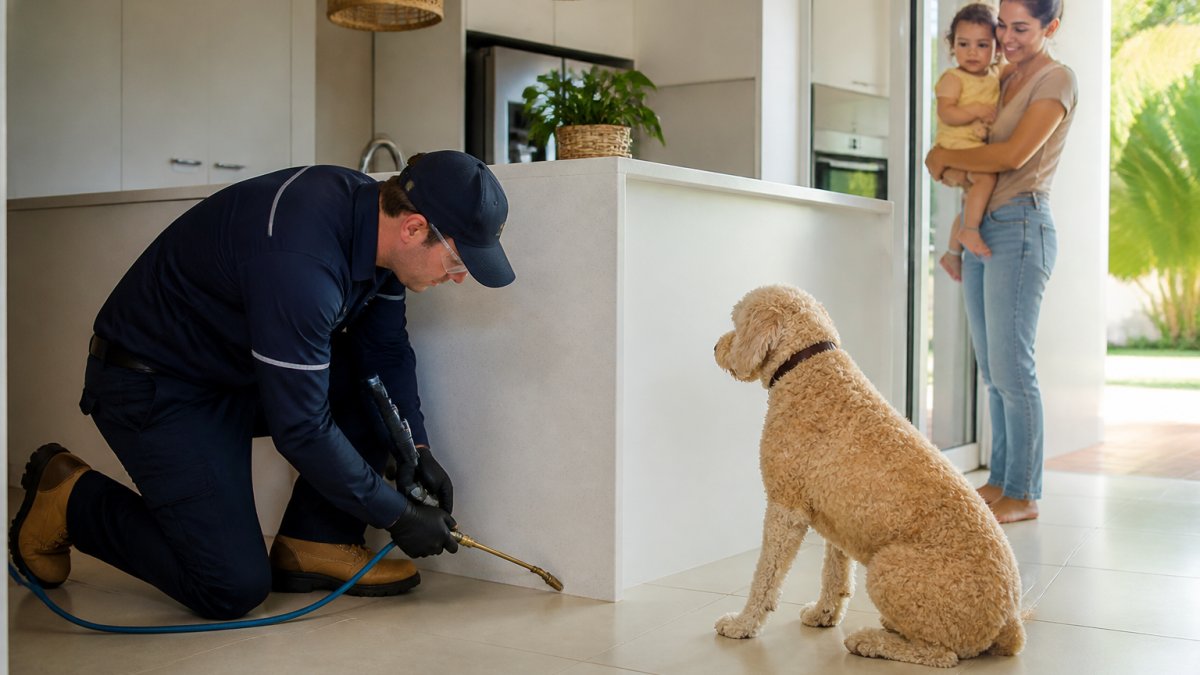
Families with fleas or ticks should look at our flea and tick treatment for homes and rentals. We keep product choice species-specific, because a treatment for cockroaches is not the same as one for fleas. If you want the full range of what we cover, see our pest control services.
Integrated Pest Management: A Plan for Your Whole Property
Integrated pest management is a whole-property plan that combines inspection, identification, monitoring and exclusion before treatment. Stakeholder co-design of sustainable urban pest management shows growing interest in planning pest control around long-term sustainability rather than reactive spraying. The value for a homeowner is that it gives you a repeatable sequence you can run yourself between professional visits, rather than waiting for a problem to become visible.
Inspection, identification, monitoring and exclusion
The sequence matters more than the products:
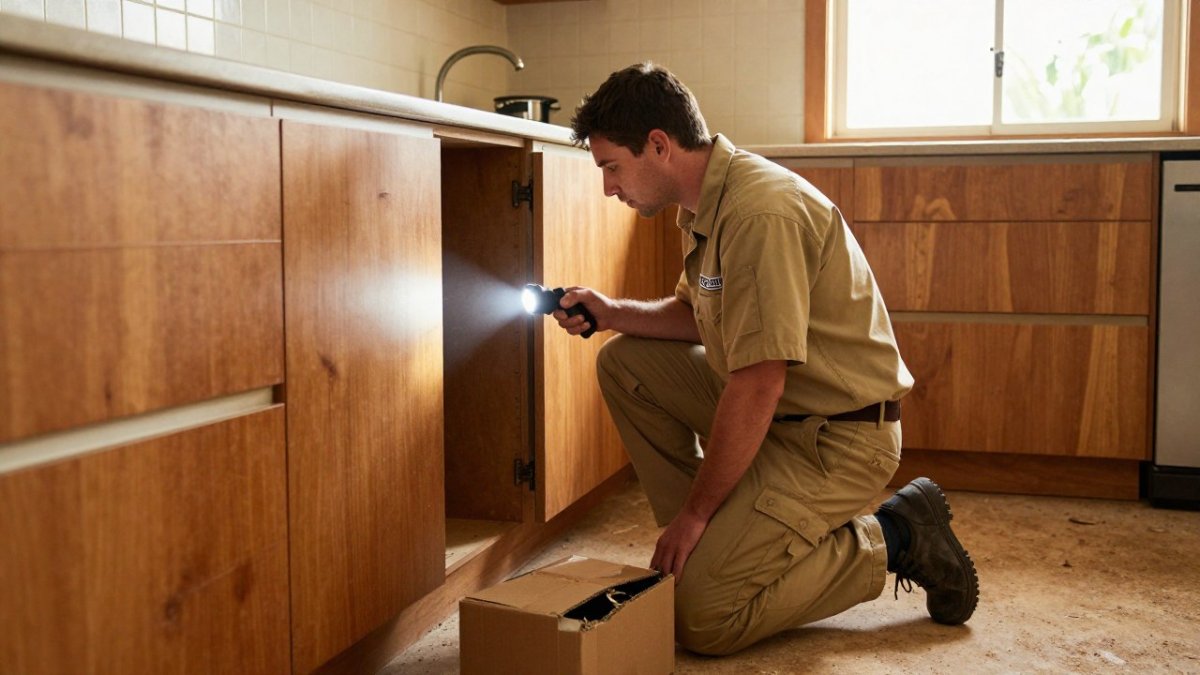
- Inspect the property for activity, damage and entry points.
- Identify the species, since ants, cockroaches and rodents need different approaches.
- Monitor with sticky traps and follow-up checks.
- Exclude by sealing gaps, fixing moisture and tightening food storage.
- Treat only where monitoring shows it is needed.
A prevention checklist by room and season
Pest pressure often follows predictable patterns, and a room-by-room routine can help catch problems before they spread.
Kitchen. Wipe benches and stovetops nightly, store dry goods in sealed containers, clear crumbs from under appliances, and check the dishwasher and fridge seals for moisture.
Bathroom and laundry. Fix dripping taps and leaking traps, ventilate to reduce condensation, and check behind the toilet cistern and washing machine for harbourage.
Bedrooms and living areas. Vacuum skirting boards and under beds, check wardrobes for carpet beetles and moths, and keep stored clothing dry.
Garden and exterior. Keep mulch and leaf litter away from the slab edge, trim vegetation back from the walls, and remove standing water from pots, gutters and drains.
Seasonal timing. In warmer, wetter months, focus on moisture control and exterior harbourage reduction, because ants and cockroaches move indoors to escape saturated ground.
When to escalate to a professional
Monitoring tells you when DIY measures are holding and when they are not. If you are still seeing activity after two to three weeks of consistent sanitation and exclusion, or if you find droppings, damage or repeated trails in the same spot, it is worth a professional assessment. Termites are a separate case, they are not a DIY pest, and a proper inspection is the best way to confirm activity. Our termite inspection is $265, and our general spray pricing is $159 for two bedrooms, $189 for three, and $220 for four.
Watch out: sealing entry points before treating an active infestation can trap pests inside the wall cavity, so exclude only after activity has been addressed.
Natural Ant Control and Species-Specific Treatment Choices
Natural ant control can work better when the colony is targeted rather than only the ants you can see. Sanitation and moisture control remove the conditions ants need in the first place.
The same logic applies across species. Rodents need humane traps and exclusion. Spiders need harbourage reduction. Termites need a proper barrier and inspection, which we price at $265. If you are treating ants, it helps to know how often to book a general pest spray to stop them returning.
Book a Property Assessment with Tropic Shield Pest Services
The real test of eco-friendly pest control is whether pests stay gone through a wet season. We work with licensed technicians, tailored tropical treatments and honest pricing. General sprays start at $159, and a termite inspection is $265.
Frequently Asked Questions
What is the safest eco-friendly pest control for homes with pets?
A careful approach combines low-toxicity targeted treatments with physical barriers and clear re-entry guidance. Ask the technician what active ingredients are used, where they are applied and how long pets and children should stay off treated surfaces. Keep pets indoors or away from the treated area until sprays have dried, and store baits and traps where dogs and cats cannot reach them. Tropic Shield Pest Services uses eco-conscious products and can explain exposure precautions before starting.
Does eco-friendly pest control work as well as conventional treatment?
For many household pests, a well-run integrated pest management plan can address the underlying cause, not just the visible insects. Effectiveness depends on correct pest identification, targeted application and follow-up monitoring. Where infestations are severe, a technician may recommend a low-toxicity treatment alongside prevention work rather than a single broad spray.
How can I control ants without using harsh chemicals?
Natural ant control starts with removing food and water sources: store food in sealed containers, wipe benches, fix leaking taps and seal cracks around doors and windows. Ant trails can be managed with bait stations placed out of reach of children and pets, plus barriers such as diatomaceous earth along entry points. Peppermint oil and tea tree oil can deter ants temporarily but do not kill colonies. For persistent infestations in tropical humidity, a professional pest inspection identifies the species and nesting sites so treatment targets the colony rather than the visible trail.
How long should pets stay away after a pest treatment?
Re-entry time depends on the product and where it was applied. As a general rule, keep pets and children off treated surfaces until sprays are fully dry, which is often a few hours, and follow the technician's written instructions for each area. Baits and traps should stay inaccessible at all times. Ask for the safety data and re-entry guidance before the visit so you can arrange to be out of the house if needed.
Ready to protect your home without over-spraying it? Get started with Tropic Shield Pest Services and request a free quote for your property assessment.