 How-to
7 Reasons Ants Keep Coming Back in Tropical Humidity
Last Updated: November 3, 2026
Quick Summary
To stop ants returning in tropical humidity, treat the colony rather than the visible trail, then cut the moisture that keeps nests active. Leave bait stations undisturbed for one to two weeks, fix leaks and condensation, and reseal gaps that tropical humidity reopens.
- Ant bait usually takes several days to a couple of weeks to show clear results.
- Spraying over bait stations kills workers before they deliver the bait to the colony.
- Wrap exposed cold pipes and dry cisterns and sink undersides during humid spells.
- Recheck door and window seals after heavy rain because humidity reopens gaps.
- If trails fade over two to three weeks and damp patches stay dry, prevention is holding.
Table of Contents
- Why Ants Keep Coming Back After Treatment in Tropical Humidity
- How to Find Ant Entry Points Before You Treat Anything
- How to Get Rid of Ants in the Kitchen Without Leaving a Food Trail
- How Long Does Ant Bait Take to Work, and Why Rushing It Fails
- Cutting the Moisture That Keeps Colonies Coming Back
- Booking a Follow-Up That Actually Holds
- Frequently Asked Questions
Why Ants Keep Coming Back After Treatment in Tropical Humidity
Ants return after treatment because the colony survives, and warm, damp conditions let it rebuild fast. This guide explains how to stop ants returning in tropical humidity, and why so many spot treatments fail within weeks.
Most people spray the ants they can see. The colony keeps going.
That is the core problem. In a humid climate, moisture softens seals, keeps nests active and gives ants a reason to stay close to your walls. Killing the visible trail changes almost nothing.
A common mistake is treating the symptom and calling it done. To see what a professional general spray involves, read what to expect during a general pest spray service. The nest, the entry points and the damp spots all stay open for business.
OECD guidance on testing baits and repellents against tropical ants notes that how well a product works depends heavily on the conditions it is used in, which is exactly why a treatment that ignores humidity tends to fail.
Watch out: spraying a trail with a household insecticide can scatter the colony into new nests, making the problem harder to trace later.
How to Find Ant Entry Points Before You Treat Anything
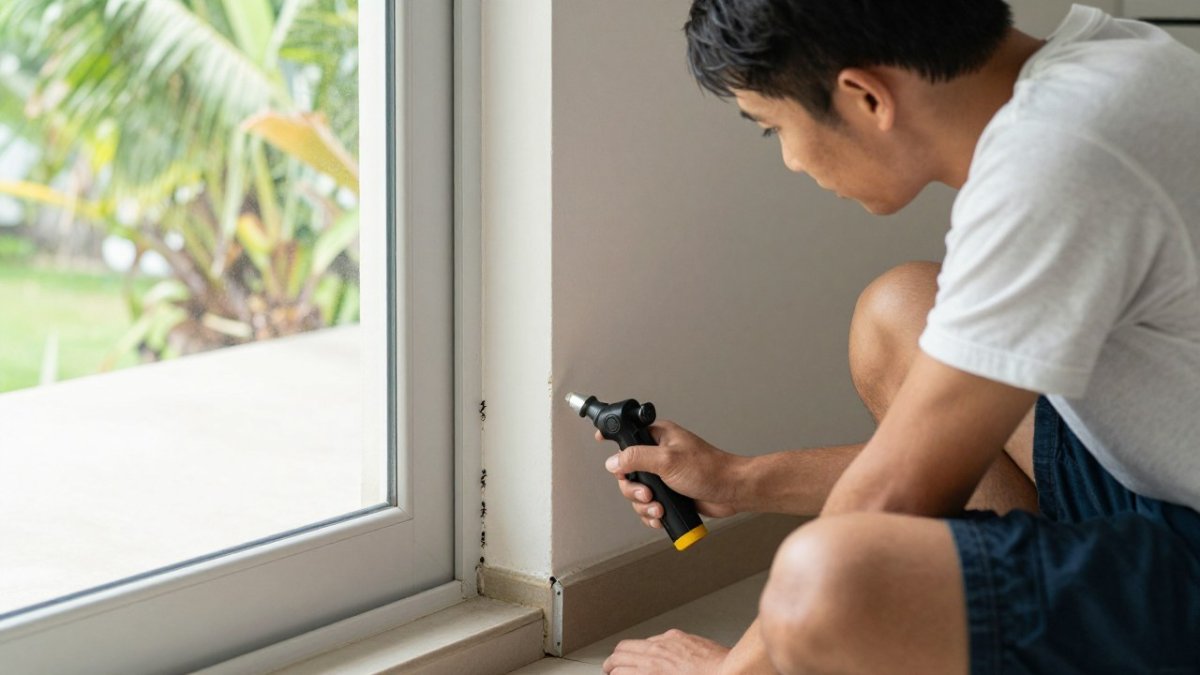
Finding ant entry points means following the trail back to where ants squeeze through, not just wiping the line you see. In humid conditions this matters more than usual, because soft, swollen timber and perished seals open gaps that would stay tight in a drier climate.
Check these spots first:
- Gaps under external doors, especially where the seal has gone soft or crumbly.
- Window frames, particularly timber that has swelled and shrunk through wet and dry cycles.
- Skirting boards and architraves, where humidity-driven movement opens hairline cracks.
- Pipework penetrations under sinks, behind washing machines and around hot-water lines.
- Cracks in walls, mortar joints and the junction between slab and frame.
- Weepholes and cavity gaps in brickwork.
Here is the routine we would use:
- Wait until evening, when ant traffic is often busiest and the air is calmer.
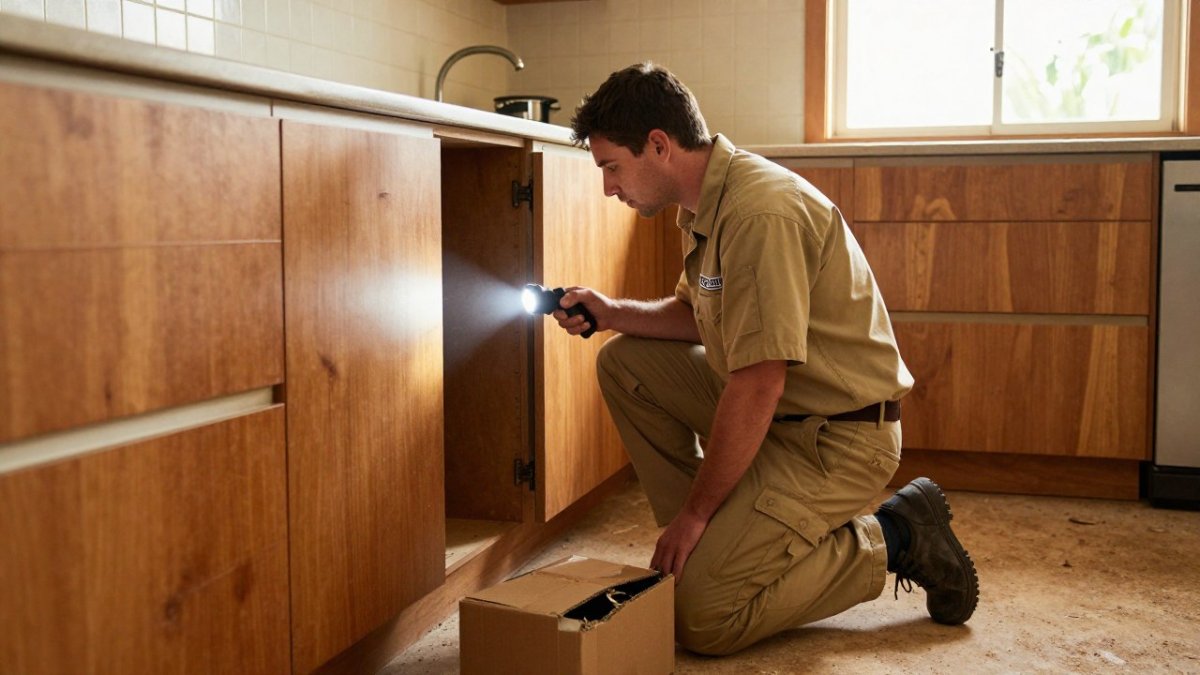
- Follow the trail slowly with a torch, without disturbing it.
- Mark each gap with a small sticker or tape.
- Check both sides of the wall, inside and out, because a gap on the outside may not line up with the visible trail inside.
- Note any spot that feels damp or looks stained near the entry.
- Photograph each marked gap with something for scale, so you can compare later whether it has widened.
Pay close attention to kitchens, bathrooms and laundries. Those rooms stay humid, and ants follow moisture. A trail that runs along a benchtop and disappears behind a splashback is usually heading for a gap in the sealant, not the cupboard itself.
Species-aware cues help narrow the search. For more expert pest management advice on prevention and entry points, explore our blog.
Watch out: spraying a trail before you have marked the entry points can scatter the colony into new nests, so mark first and treat later.
How to Get Rid of Ants in the Kitchen Without Leaving a Food Trail
Getting rid of ants in the kitchen starts with removing what keeps them coming: crumbs, spills, grease and open food. Clean the surfaces ants walk on, then store food where they cannot reach it.
- Wipe benches and stovetops after every meal.
- Sweep crumbs from floors and under appliances.
- Store pantry items in airtight containers.
- Rinse drink bottles and put them away.
- Feed pets on a mat and lift bowls after meals.
- Take rubbish out nightly and keep bins sealed.
- Fix dripping taps and dry the sink before bed.
Vinegar and essential oils like peppermint or tea tree can disrupt scent trails, but household deterrents such as vinegar do not kill ants, so they will not fix an active nest on their own.
Treat those as trail breakers, not a cure.
How Long Does Ant Bait Take to Work, and Why Rushing It Fails
Ant bait usually takes several days to a couple of weeks to show clear results. Worker ants carry the bait back to the colony, so the delay is the point, not a failure.
Most people give up too early. They see ants still moving on day two and reach for the spray.
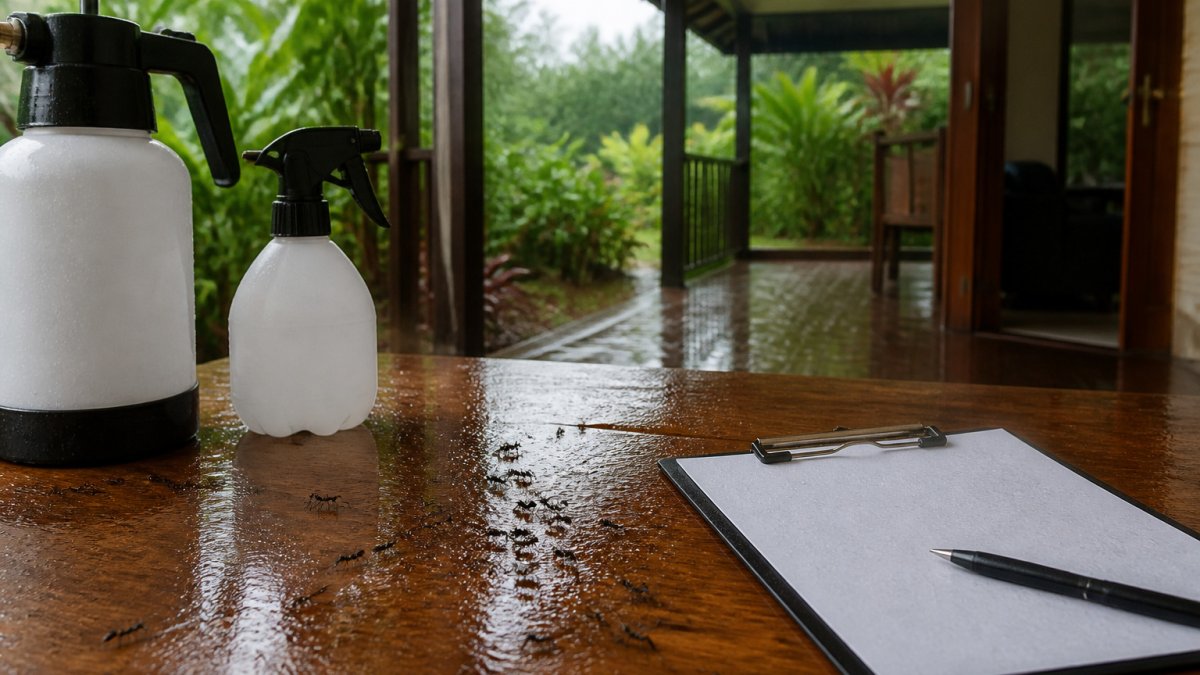
That is the wrong move. Spraying over bait stations kills the workers before they deliver it, and the colony carries on.
- Leave bait stations undisturbed.
- Place them near trails, not on top of them.
- Keep children and pets away from stations.
- Check stations every few days and top up as needed.
- Judge results after one to two weeks, not hours.
research on how tropical ant colonies manage temperature and humidity helps explain why nests stay active in steady warm conditions, which is why bait needs time to work through a colony that never truly slows down.
Bait works on a delay, so the timing of each step matters more than the product you choose.
| Step | What to do | Timing |
|---|---|---|
| Place stations | Put bait near trails, not on top of them | Before you judge any result |
| Leave undisturbed | Do not spray over stations or move them | Throughout treatment |
| Top up | Check stations and refill as needed | Every few days |
| Judge results | Assess whether the colony is fading | After one to two weeks |
Cutting the Moisture That Keeps Colonies Coming Back
Moisture is the reason ant problems recur here more than in cooler climates. Dry out the damp spots and you remove the invitation.
Start with leaks and standing water:
- Fix dripping taps and leaking pipes promptly.
- Dry damp areas under sinks and around appliances.
- Clear gutters so water does not pool against the walls.
- Remove standing water from pots, trays and drains.
- Improve airflow in bathrooms and laundries with an exhaust fan or a window left ajar.
Then deal with condensation, which is the humidity-specific part. Cold water pipes, toilet cisterns and the underside of metal sinks sweat in warm, moist air.
Then seal the building. Use weather stripping on doors, seal cracks and gaps with a suitable filler, and repair damaged skirting and frames. Recheck seals after heavy rain, because humidity softens some fillers and expands timber, reopening gaps you closed months earlier.
Damp storage is the quiet culprit. Cardboard boxes, pet food bags and open flour or sugar containers absorb moisture and become a food-and-water source in one. Decant dry goods into sealed containers and keep storage off concrete floors, which wick moisture upward.
Measuring whether it is working matters as much as the fixes. Keep a simple monitoring checklist:
- Note trail frequency in each marked area once a week.
- Record any damp patch that returns after drying.
- Check bait stations for activity every few days.
- Note sightings after rain, when humidity peaks.
If trails fade over two to three weeks and damp patches stay dry, prevention is holding. If activity returns after each humid spell, the moisture source has not been fully addressed.
Ants need water as much as food. Cut the water and the colony loses its reason to stay.
Booking a Follow-Up That Actually Holds
A follow-up is what separates a treatment that lasts from one that fades. Book a return visit to check the bait worked and reseal anything the weather has opened.
Many homeowners skip this step. Then the ants return and the whole cycle restarts.
If you want a professional general spray for ants and other common pests, you can book general pest control for your home, rental or business.
When you are ready, request a quote and we will talk through what your property needs.
Frequently Asked Questions
Why do ants keep coming back after treatment?
Most treatments kill the ants you can see, not the colony behind the wall. If the queen and brood survive, workers rebuild the trail within days. In tropical humidity the problem compounds: damp timber, condensation and warm nights keep nest conditions favourable, so colonies recover faster. Food residue, pet bowls and dripping taps give them a reason to return. A treatment only holds when it reaches the nest and the moisture and food sources around it are removed at the same time.
Does humidity attract ants into the house?
Humidity does not attract ants the way food does, but it changes where they nest. Damp areas such as under sinks, behind appliances, in wall cavities and around leaking taps give colonies stable moisture, which many species need. Outdoor nests also move closer to buildings when heavy rain floods garden nests. Sealing damp spots, fixing leaks and improving airflow removes the conditions that let a colony settle in and stay.
Should I clean an ant trail or follow it first?
Follow it first. The trail leads to entry points and often to the nest, which is the information you need before treating. Once you have mapped the route, wipe the trail with soapy water or a vinegar solution to break the scent line. Vinegar and similar household deterrents disrupt the trail but do not kill ants, so use them alongside bait or a professional treatment rather than instead of one.
How long does ant bait take to work?
Bait is deliberately slow. Workers carry it back to the colony and pass it to the queen and brood, so you should expect several days to a couple of weeks before activity drops noticeably. Do not spray over bait stations or clean the trails leading to them, because that stops the transfer. If activity is unchanged after two weeks, the bait may be the wrong type for the species present, which is where a professional inspection helps.
Ants in a humid climate are stubborn, but they are beatable with the right sequence: find the entry points, cut the food and moisture, let bait work, then follow up. Tropic Shield Pest Services offers licensed technicians, eco-friendly treatments built for tropical conditions, and same-day service when you need it fast. Get started with Tropic Shield Pest Services and keep your home protected through the wet season and beyond.