 How-to
How Do You Get Rid of Paper Wasps Under a Tropical Roof?
Last Updated: November 16, 2026
Quick Summary
Getting rid of paper wasps under a tropical roof means treating the nest with a registered insecticide after dark, when most of the colony is on it, then removing the empty nest the next day. Apply to the nest entrance from the side, never from directly beneath, and use powder on porous thatch or palm roofing.
- Watch wasp flight lines from a safe distance in the early morning or late afternoon to locate the nest.
- Treat nests after sunset, keeping your torch pointed away from the nest.
- Use insecticidal powder rather than wet spray on porous tropical roofing where the label allows.
- Leave the nest overnight, then check for activity in daylight before removing it.
- Call a professional if the nest is high, inside the roof space, or anyone is allergic to stings.
Table of Contents
- Why Paper Wasps Target Tropical Roofs
- Finding a Wasp Nest in Roof Space, Eaves and Thatch
- Paper Wasp Nest Removal: Step-by-Step Instructions
- DIY Treatment vs Professional Wasp Control
- How to Prevent Wasp Nests Under Roof and Eaves
- After-Treatment Checks and When to Call a Professional
- Book a Roof Inspection With Tropic Shield Pest Services
- Frequently Asked Questions
Why Paper Wasps Target Tropical Roofs
Paper wasps are a constant presence under Far North Queensland rooflines, and getting rid of paper wasps under a tropical roof starts with understanding why they choose that spot. Warm, sheltered eaves and roof spaces give paper wasps exactly what they need to build and defend a nest.
The tropical climate is the main driver. Unlike cooler regions where wasp activity drops away for months, our warm, humid conditions let colonies stay active far longer. Deep eaves, wide roof overhangs and thatched or insulated roof spaces hold steady warmth and stay dry through the wet season, prime real estate to a paper wasp.
Paper Wasp Identification and Nest Characteristics
Paper wasps are slender stinging insects with long legs and a narrow waist (Paper wasps). They range from brown to black, often with yellow or orange bands, and they fly with their legs dangling beneath them. That dangling-leg flight is one of the easiest field signs to spot.
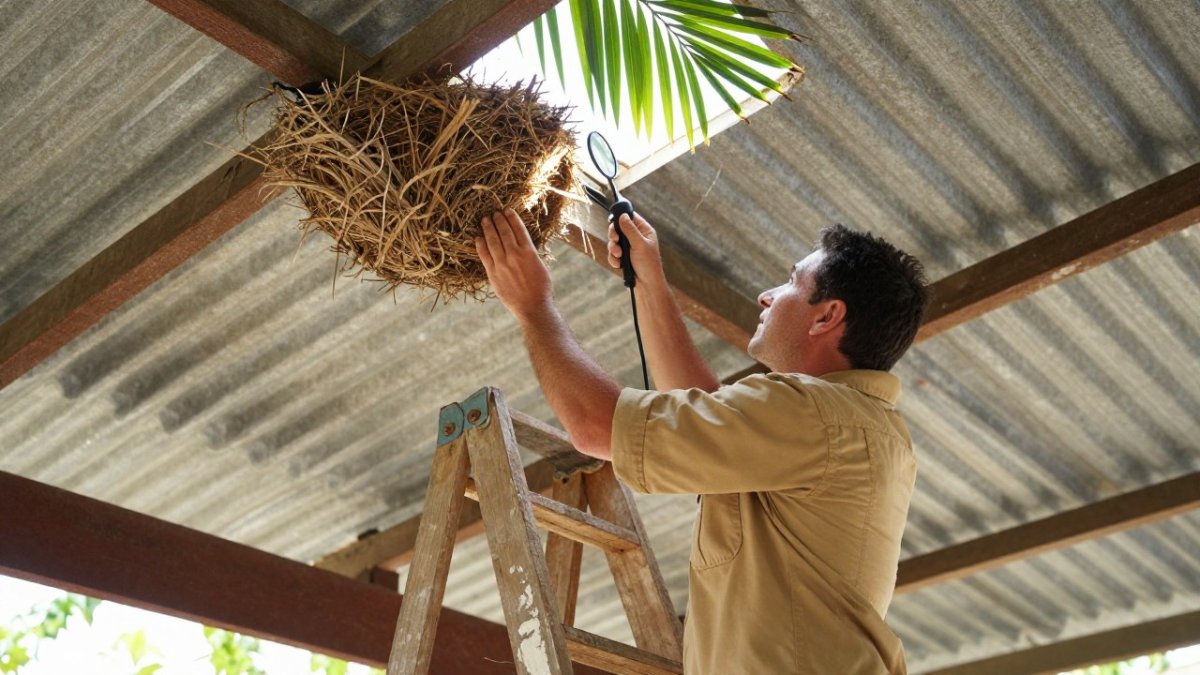
Their nests are the giveaway. A paper wasp nest is an open-comb structure: a small cluster of papery cells hanging from a short stalk, with no outer envelope. The insects chew wood fibre and mix it with saliva to make that paper (Paper wasps). You will usually find the open comb tucked under eaves, behind fascia boards, inside roof spaces or on the underside of garden structures. The nest entrance faces downward, which keeps rain out.
Tropical Climate and Seasonal Wasp Behaviour
Wasp activity in the tropics does not follow the neat seasonal shutdown of colder climates. Colonies can build, expand and rebuild across much of the year, and queens may start fresh nests whenever conditions suit.
That means a nest treated once is not the end of the story. Warmth and humidity keep the cycle turning, so prevention and follow-up matter more here than in temperate areas. A nest you knock down in the dry season can be replaced within weeks.
Finding a Wasp Nest in Roof Space, Eaves and Thatch
The fastest way to locate a paper wasp nest is to watch wasp traffic from a safe distance. Stand well back in the early morning or late afternoon and follow the flight lines.
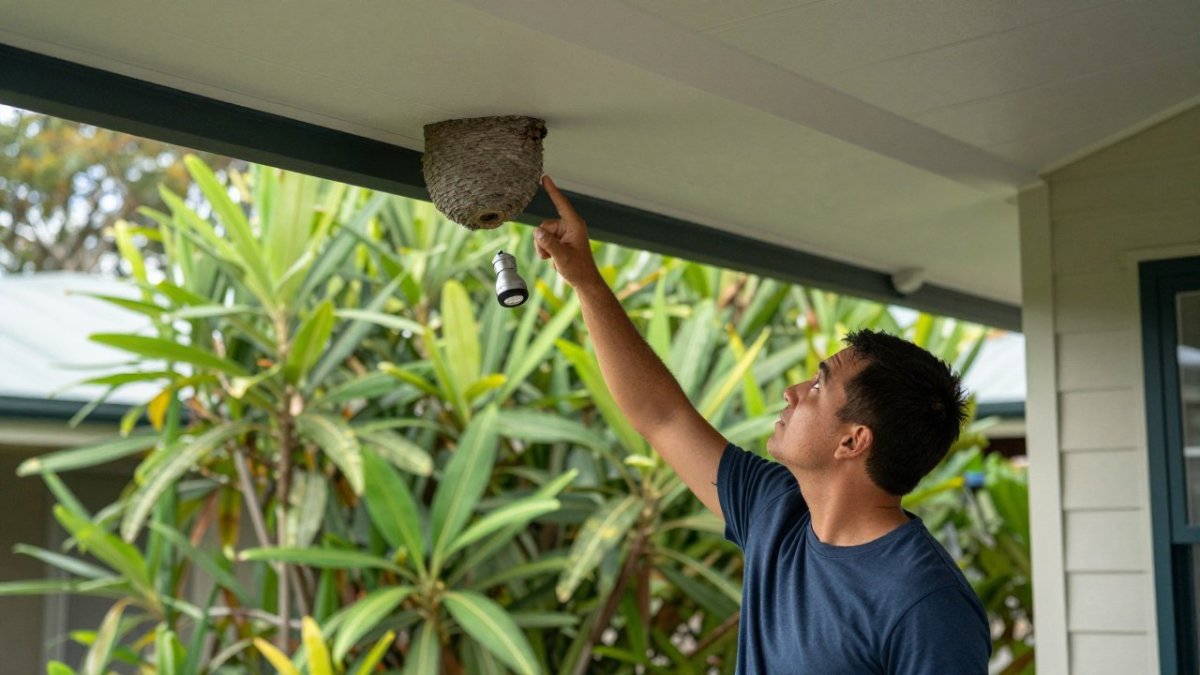
Check these common nest locations:
- Under eaves and fascia boards
- Inside the roof space near vents and gaps
- On thatch overhangs and exposed roof timbers
- Behind shutters, awnings and outdoor light fittings
- On balconies, pergolas and garden sheds
Never climb onto a roof to inspect a nest. Use binoculars or a torch from the ground. Wasps become agitated when their nest is disturbed, and a fall from height is a far worse outcome than a sting.
Paper Wasp Nest Removal: Step-by-Step Instructions
Paper wasp nest removal is safest when you treat the nest rather than physically removing it while wasps are active.
What you'll need:
- A registered wasp insecticide (aerosol or insecticidal powder) labelled for the nest type and surface
- A long-reach spray or applicator
- Protective clothing: long sleeves, gloves, covered shoes, safety glasses
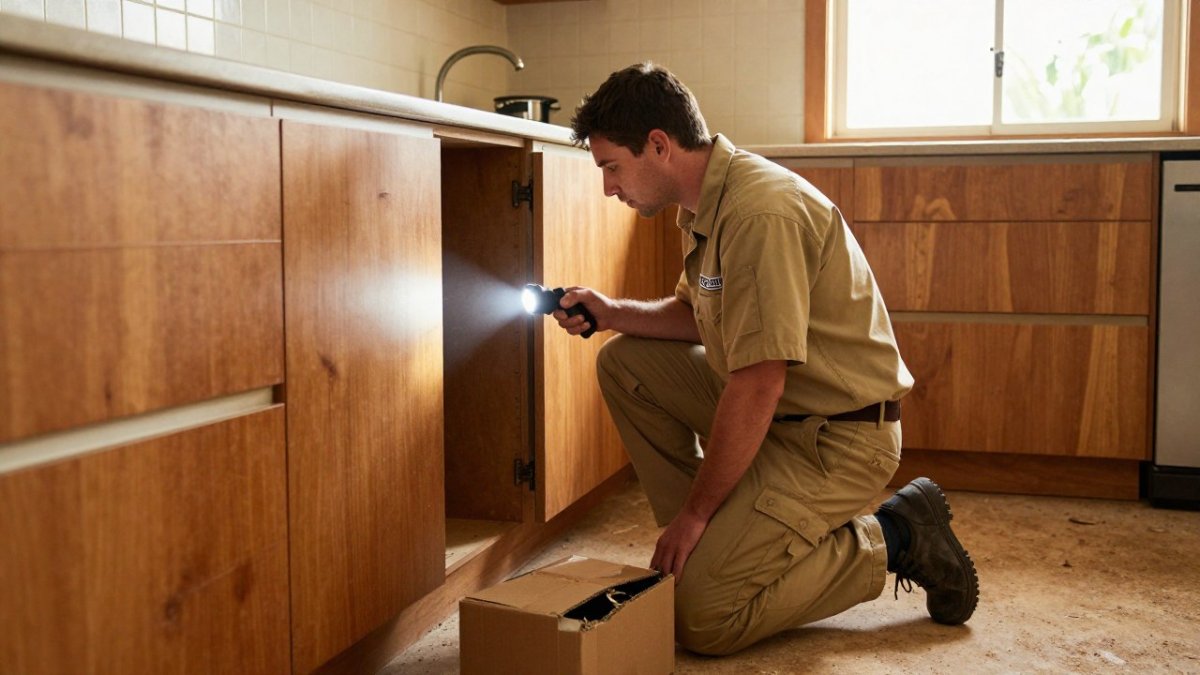
- A torch with a narrow beam
- A second person watching from a safe distance
- A sealed bag for nest disposal
Step 1: Plan your approach. Identify the nest location and plan a clear retreat path.
Step 2: Treat at night. Wait until after dark, when wasps are less active and most are on the nest.
Step 4: Leave it overnight. Do not return the same night.
Step 5: Check and remove. Return in daylight, from a safe distance, and look for wasp activity.
Step 6: Clean the surface. Wipe down the area to remove residual scent that can attract new wasps.
| Step | Action | Timing |
|---|---|---|
| 1 | Plan approach, retreat path and wind direction | Daytime |
| 2 | Suit up and wait for dark | After sunset |
| 3 | Spray or dust nest entrance and retreat | Night |
| 4 | Leave the nest undisturbed | Overnight |
| 5 | Check activity and remove nest | Next day |
| 6 | Clean the mounting surface | After removal |
Watch out: spraying from directly underneath a nest is the most common mistake.
Treating the Nest Entrance at Night
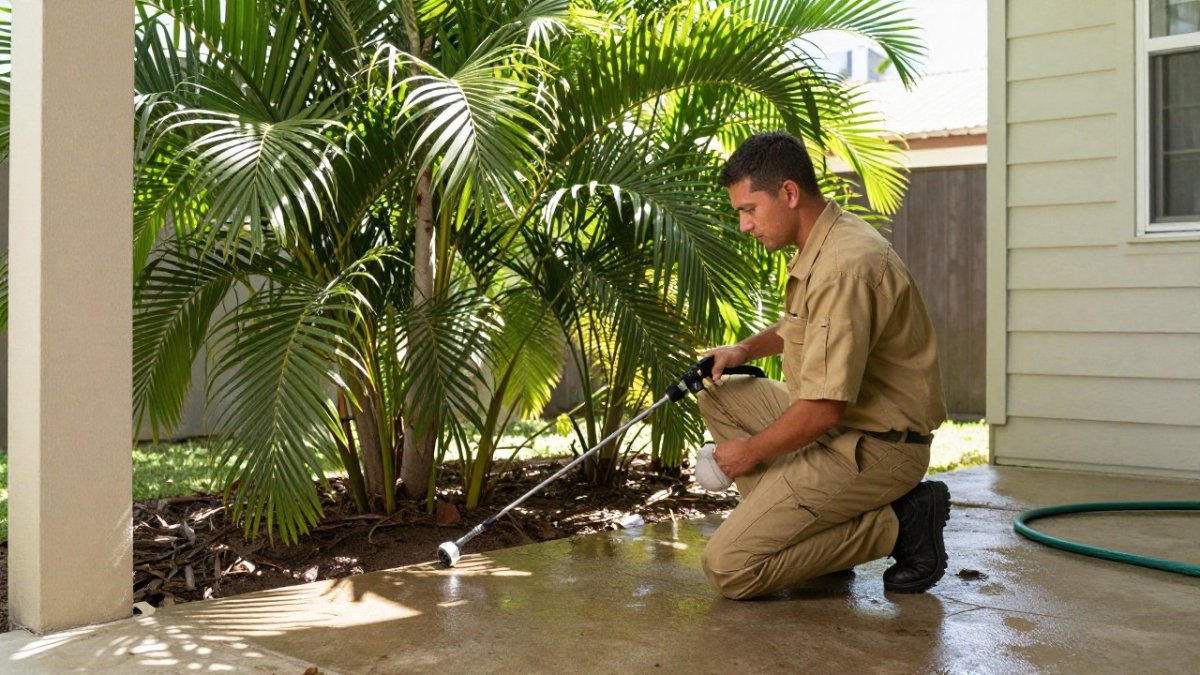
Night treatment works because paper wasps are far less active after dark and most of the colony is on the nest, so a direct application to the entrance and open comb reaches them where they cluster. A ready-to-use aerosol is simplest for a single exposed nest; insecticidal powder suits nests tucked into gaps a spray cannot reach, and it is the better choice on porous tropical roofing where a wet spray would soak in or run off.
Watch out: runoff from a roof treatment can enter gutters, tanks or the living space below. Check the product label for restrictions near water tanks and food areas, and never apply above an open window, air intake or rainwater collection point.
Roof-Specific Safety and Pesticide Precautions
Roof work adds real risk. Never treat a nest from a ladder if you can reach it another way, and never work at height alone. If a nest sits high in the roof space, that is a job for a professional with the right access equipment.
Use only a registered insecticide and follow the label exactly. Keep children and pets away from the treated area, and observe the re-entry time on the product label. Ventilation matters in a closed tropical roof space, do not seal yourself in with a freshly treated nest. For more on keeping treatments safe around family and animals, see our guide to pet and child safe pest control.
DIY Treatment vs Professional Wasp Control
DIY treatment works for a single, exposed nest you can reach safely from the ground. Professional wasp control is the better call when the nest is high, hidden in the roof space, large, or in a spot you cannot reach without climbing. If anyone in the household is allergic to stings, do not attempt it yourself.
Here is how the two compare:
| Factor | DIY treatment | Professional wasp control |
|---|---|---|
| Best for | One exposed, low nest | High, hidden or multiple nests |
| Access | Ground level only | Roof space and height access |
| Safety | Higher sting risk | Trained, equipped technicians |
| Follow-up | Your responsibility | Included checks and prevention |
For homes, rentals and businesses across the region, our general pest control service covers wasps along with ants, cockroaches, spiders, fleas and ticks.
How to Prevent Wasp Nests Under Roof and Eaves
Preventing wasp nests under the roof comes down to removing the sheltered spots wasps love and sealing the gaps that lead into the roof space. Prevention is far easier than repeated nest removal, especially in a climate where colonies rebuild quickly.
Try these steps:
- Seal gaps in eaves, fascia and roof vents with a flexible sealant suited to the roof material
- Repair damaged screens on doors and windows
- Check eaves and roof space monthly during warm months, and after any stretch of wet weather
- Remove old, empty nests promptly, the scent and the sheltered site attract new queens
- Keep outdoor bins sealed and tidy
- Trim back trees and shrubs touching the roofline
- Repair cracked or lifted roof tiles, and replace loose flashing where wasps can slip behind it
On tropical roofing, the material changes the approach. Thatch and palm roofs offer deep, dry voids ideal for nesting, so inspect the underside of overhangs and any exposed battens after the wet season.
A regular inspection routine catches new nests while they are small and easy to treat. A small nest is a far simpler job than a full comb, and early removal stops the colony growing.
For an overview of the full range of services available for your property, explore our pest control services.
After-Treatment Checks and When to Call a Professional
After-treatment checks confirm the colony is gone. Return in daylight, from a safe distance, and watch for wasp activity around the nest entrance for a few minutes. No movement over several visits means the treatment has worked. Then remove the nest and clean the surface.
Call a professional when:
- The nest is high or inside the roof space
- Wasps keep returning after treatment
- You find multiple nests
- Anyone in the home is allergic to stings
- You cannot reach the nest safely
Choosing a local pest control provider that understands tropical conditions makes a real difference to long-term results. Our guide on how to choose local pest control that works walks through the questions to ask.
Book a Roof Inspection With Tropic Shield Pest Services
If you would rather not climb, spray or second-guess a nest under your roofline, we can take it from here. Tropic Shield Pest Services sends licensed technicians to inspect, treat and prevent wasp problems across Far North Queensland homes, holiday rentals and commercial properties, using safe, eco-friendly methods suited to families, pets and guests.
For current prices or a quote, visit our website. Same-day service is available for urgent problems.
Get started with Tropic Shield Pest Services and keep your roof wasp-free this season. Request a free quote and book your roof inspection today.
Paper wasps will keep returning to a roofline that offers shelter and easy access. The fix is a proper inspection, a safe treatment and a prevention plan that suits a tropical home.
Frequently Asked Questions
How do you remove a paper wasp nest under a roof?
Treat the nest at night when paper wasps are less active and clustered on the open-comb nest. Wear protective clothing, keep children and pets indoors, and apply a registered insecticide to the nest entrance from a safe distance using a long-reach spray. Never stand directly beneath the nest. For nests high in a tropical roof space or thatch, roof access and fall risk make paper wasp nest removal a job for licensed technicians rather than a DIY task.
Is it safe to remove a paper wasp nest yourself?
It can be done for small, low nests you can reach safely from the ground, but agitated wasps sting repeatedly and can trigger serious reactions in allergic people. Working at height on a tropical roof adds fall risk on top of the sting risk. If the nest is in the roof space, under high eaves, or you or anyone in the home is allergic, professional wasp control is the safer choice.
How can you tell if a wasp nest is active?
Watch from a safe distance for individual wasps flying to and from a single point, which is the nest entrance. An open-comb paper wasp nest shows visible cells and a steady stream of activity during the day. If you see no movement over several warm days, the nest may be abandoned, but confirm before touching it, as paper wasps can return to the same nesting spot.
How do you stop paper wasps nesting under eaves?
Seal gaps and entry points into the roof space, repair damaged screens on doors and windows, and remove old nests so wasps do not reuse the site. Trim foliage back from the roofline and check eaves and thatch monthly during the warmer months. A scheduled inspection from a licensed pest control team is the most reliable way to prevent wasp nests under roof areas before they grow.