 How-to
Is Pest Control Safe for Pets and Children?
Last Updated: November 6, 2026
Quick Summary
Pet and child safe pest control depends on the product, the application and how the treated area is managed afterwards. Professional pest control can be safe when done properly, though it is not risk-free, so always follow the technician's re-entry advice.
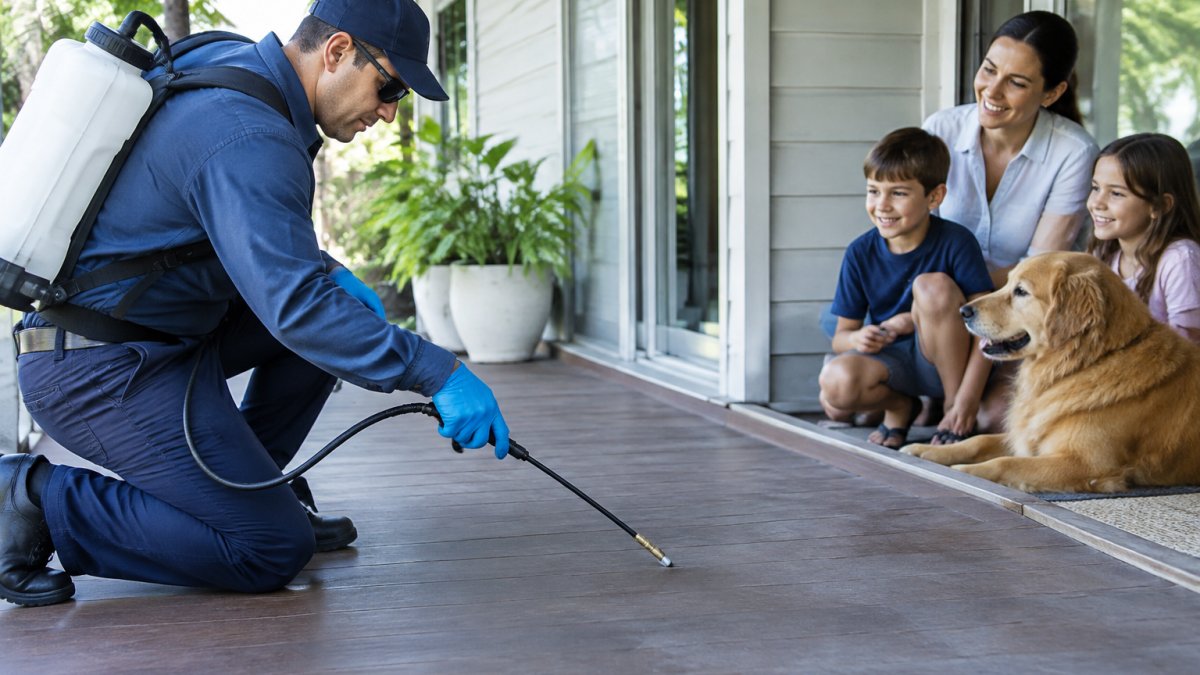
- Keep children and pets off wet surfaces until dry, then ventilate the treated area.
- Most pets can return once treated surfaces are dry, often a few hours, but ask for a specific re-entry time.
- Remove pet bowls, beds, toys and litter trays before treatment and cover fish tanks.
- DIY treatments cause more household exposure than professional ones, usually through over-application.
- If someone swallows a product, do not induce vomiting; call the Poisons Information Centre on 13 11 26.
Table of Contents
- Is Pest Control Safe for Pets and Children?
- Low-Toxicity Pest Control Methods That Reduce Exposure
- Pest Control Safety Precautions Before, During and After Treatment
- How Long After Pest Control Can Pets Come Inside?
- Preparing for Pest Control With Pets
- Interpreting the Product Label and Active Ingredients
- DIY Treatment and Bait Safety
- Exposure Response and Emergency Guidance
- What to Know About Odour, Residue and Ventilation
- Integrated Pest Management and Prevention
- How Professional Treatments Reduce Exposure Risk
- Getting the Timing Right for Your Family
- Frequently Asked Questions
Is Pest Control Safe for Pets and Children?
Pet and child safe pest control comes down to the product, the application, and how the treated area is managed afterwards. Professional pest control can be safe when done properly, though it is not risk-free.
Low-Toxicity Pest Control Methods That Reduce Exposure
Low-toxicity pest control means targeted application rather than broad spraying, using baits or gels placed out of reach. A systematic review of pesticide exposure and associated risks found application method matters as much as the product. See our eco-friendly pest control guide and general pest control service.
Pest Control Safety Precautions Before, During and After Treatment
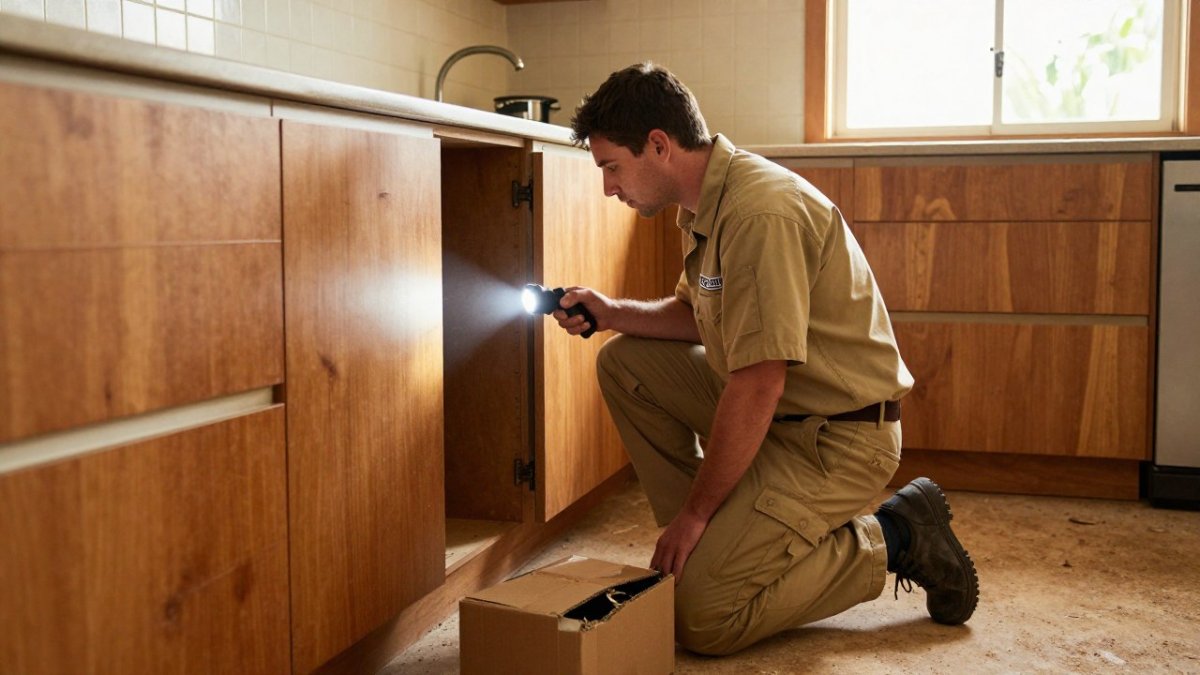
Clear floors, put away pet bowls, toys and bedding, and tell the technician about children, pets, pregnancy or asthma. Keep everyone off wet surfaces until dry, then ventilate, letting a pet back in before surfaces dry is the most common mistake. Read what to expect during a general pest spray service, or call or email our team.
The man is Australian.
How Long After Pest Control Can Pets Come Inside?
Most pets can return once treated surfaces are dry, often a few hours, though some residual sprays need longer. Ask the technician for a specific re-entry time and stick to it.
Preparing for Pest Control With Pets
Remove everything your pet eats from, sleeps on or licks, bowls, beds, toys and litter trays, and cover fish tanks. Walk the dog beforehand and move cats and caged pets off site; puppies, kittens and elderly animals need longer out.
Interpreting the Product Label and Active Ingredients
The label lists active ingredients, registered use, re-entry time and first aid instructions. In Australia, products must be registered with the Australian Pesticides and Veterinary Medicines Authority; check the APVMA website. "Safe" does not mean risk-free.
DIY Treatment and Bait Safety
DIY treatments cause more household exposure than professional ones, usually through over-application. Never transfer product from its original container or use outdoor products indoors, and keep baits physically out of reach.
Exposure Response and Emergency Guidance
If someone swallows a product, do not induce vomiting, call the Poisons Information Centre on 13 11 26 with the label ready (Poisoning). For pets, call your vet and watch for drooling, vomiting, tremors or wobbliness. If symptoms are severe, call 000 (Poisoning).
What to Know About Odour, Residue and Ventilation
Modern treatments are usually low-odour, but low-odour is not no residue. Water-based products dry faster; solvent-based ones linger and need more ventilation. Avoid sleeping in a freshly treated room the same day.
Integrated Pest Management and Prevention
The best way to reduce exposure is to need less pesticide: seal gaps, store food in sealed containers, fix leaks, keep bins closed and clear debris. In a tropical climate, prevention keeps numbers down between visits.
How Professional Treatments Reduce Exposure Risk
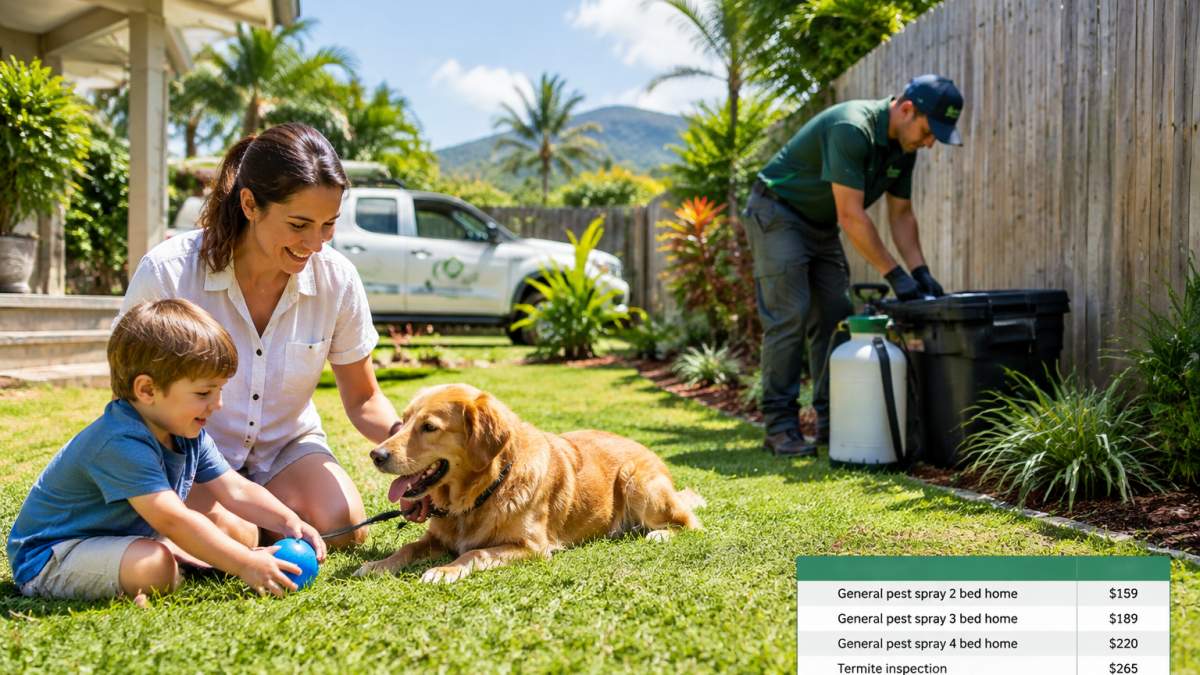
A licensed technician applies the right product, at the right rate, in the right place, with clear written re-entry advice. Our general pest spray is $159 for a two-bedroom home, $189 for three bedrooms and $220 for four bedrooms; a termite inspection is $265.
| Service | Price (AUD) | Typical use |
|---|---|---|
| General pest spray, 2-bedroom home | $159 | Ants, cockroaches, spiders, fleas, ticks |
| General pest spray, 3-bedroom home | $189 | Standard family home |
| General pest spray, 4-bedroom home | $220 | Larger homes and rentals |
| Termite inspection | $265 | Pre-purchase, annual check, suspected activity |
Getting the Timing Right for Your Family
The safest approach to pet and child safe pest control is a sequence: prepare, keep children and pets clear during application, wait for surfaces to dry, ventilate, then prevent pests returning. For a treatment planned around young children and pets, get in touch with Tropic Shield Pest Services.
Frequently Asked Questions
Is pest control safe for pets and children?
Registered products applied by licensed technicians are safe when you follow the label directions and the technician's re-entry advice. The term safe does not mean risk-free, so keep children and pets off treated surfaces until dry and ventilated. Ask which active ingredients are being used, request the safety data sheet, and confirm re-entry times for your household before the technician starts.
How long after pest control can pets come inside?
Most interior treatments allow pets back once surfaces are dry, usually a few hours, but the product label and technician set the exact time. Exterior perimeter sprays often need pets kept off treated areas for longer. Ask for the re-entry time in writing, keep water bowls and food bowls away from treated zones, and watch for any signs of drooling, vomiting or lethargy after your pet returns.
What should I do before a pest treatment if I have pets?
Remove pets, food bowls, water bowls and bedding from the treatment area, cover fish tanks and turn off their filters, and secure cages. Tell the technician about any pregnant, elderly or very young household members and any pet with health issues. Preparing for pest control with pets also means clearing floors and cupboards so the technician can reach skirting boards and harbourage areas without moving your belongings.