 Ultimate guide
Signs of Termite Damage in Cairns Homes: A Homeowner's Guide
Last Updated: November 14, 2026
Quick Summary
The signs of termite damage in Cairns homes include pencil-width mud tubes on walls, piers and slab edges, hollow or soft-sounding timber, bubbling paint, crumbling skirting boards and doors that suddenly stick. Termites eat timber from the inside out, so damage is often advanced before it shows. Leave any evidence intact and book a licensed inspection.
- Warm, humid air and year-round soil moisture keep subterranean termites active far longer than in southern states.
- Break a small section of mud tube open: live termites often retreat inside and the tunnel is rebuilt within days.
- Slab homes carry higher risk because slab edges, joints and service penetrations give termites concealed routes into structural timber.
- Do not spray, drill or disturb suspected damage, because disturbed termites scatter and make treatment harder.
- Schedule an inspection before the wet season and check again after it, when new mud leads and swarmers appear.
Table of Contents
- Why Cairns Homes Face Constant Termite Pressure
- The First Signs of Termite Damage in a Home
- What Termite Mud Tubes Look Like and Where to Find Them
- Interior Warning Signs: Paint, Skirtings and Sticking Doors
- Termites in Concrete Slab Homes and Concealed Entry Points
- Outdoor Evidence: Trees, Stumps and Slab Edges
- Wet Season Termite Activity and Seasonal Risk
- Telling Termite Damage Apart from Lookalikes
- What to Do Immediately After Finding Suspected Damage
- Booking a Termite Inspection Cairns Homeowners Can Rely On
- Frequently Asked Questions
Why Cairns Homes Face Constant Termite Pressure
Termite pressure in Cairns never really stops. Warm, humid air, high rainfall and year-round soil moisture create conditions where subterranean termites stay active far longer than they do in southern states. Timber stays damp, soil stays workable, and colonies keep foraging close to foundations.
That matters because the signs of termite damage in Cairns homes often appear quietly, long before anything looks broken. Mud on a pier is often the only visible clue, and owners may not realise what it means.
Two things drive the risk here: the tropical climate and the housing stock. Many Cairns homes sit on concrete slabs or high-set stumps, both of which give termites concealed routes into structural timber. Add heavy wet season rain and you have the ideal setup for a termite infestation to establish without being noticed.
Termite damage is the physical deterioration of timber caused by termites feeding on it from the inside out. This guide walks through the early warning signs, how to tell them apart from lookalikes, and what to do the moment you suspect something. Below, we'll show you exactly what to check, room by room and outside the walls.
The First Signs of Termite Damage in a Home
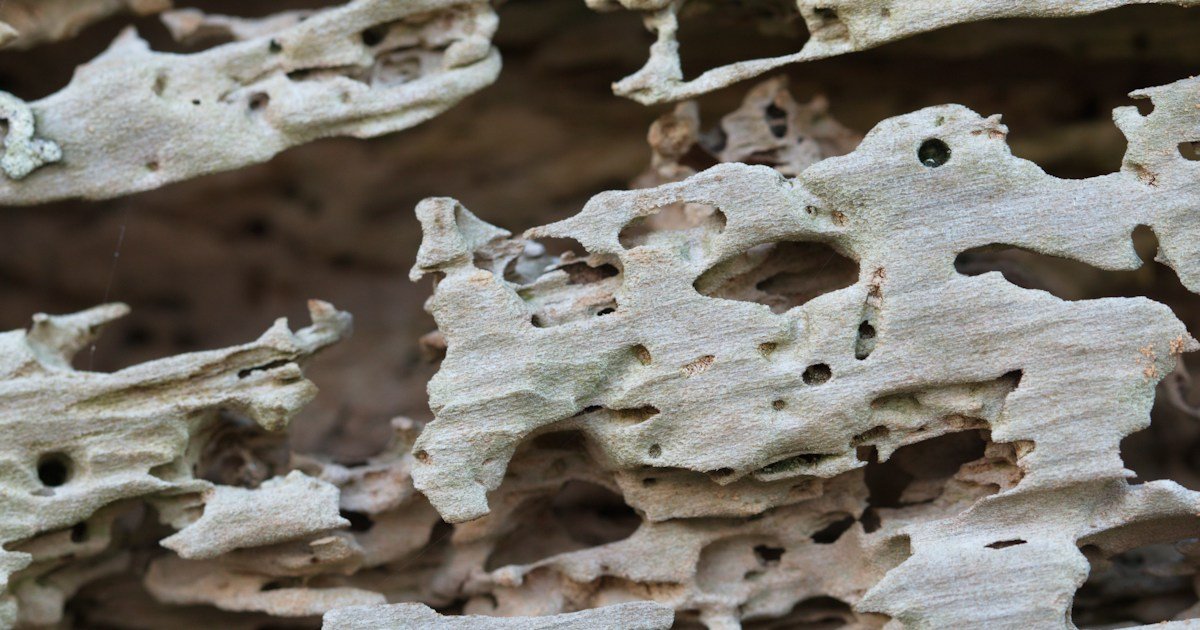
The earliest signs of termite damage in a home are usually subtle: mud tubes, hollow-sounding timber, rippled paint or doors that suddenly stick. Most homeowners miss them because termites work from the inside out, leaving the surface largely intact until damage is advanced.
Start with a slow walk around the perimeter and through each room. You are looking for changes, not catastrophes. A room-by-room checklist helps you spot mud tubes, hollow timber and swarmers before hidden damage spreads, and you can work through our room-by-room guide as you go.
Mud Tubes, Trails and Leads on Walls and Piers
Mud tubes, also called mud trails or mud leads, are pencil-width tunnels of soil and saliva that termites build to travel between the colony and your timber. They protect termites from light and dry air. Look along brickwork, piers, stumps and foundation walls, especially where soil meets masonry. Break a small section open: live termites often retreat inside, and the tunnel is rebuilt within days.
Hollow-Sounding and Soft Timber
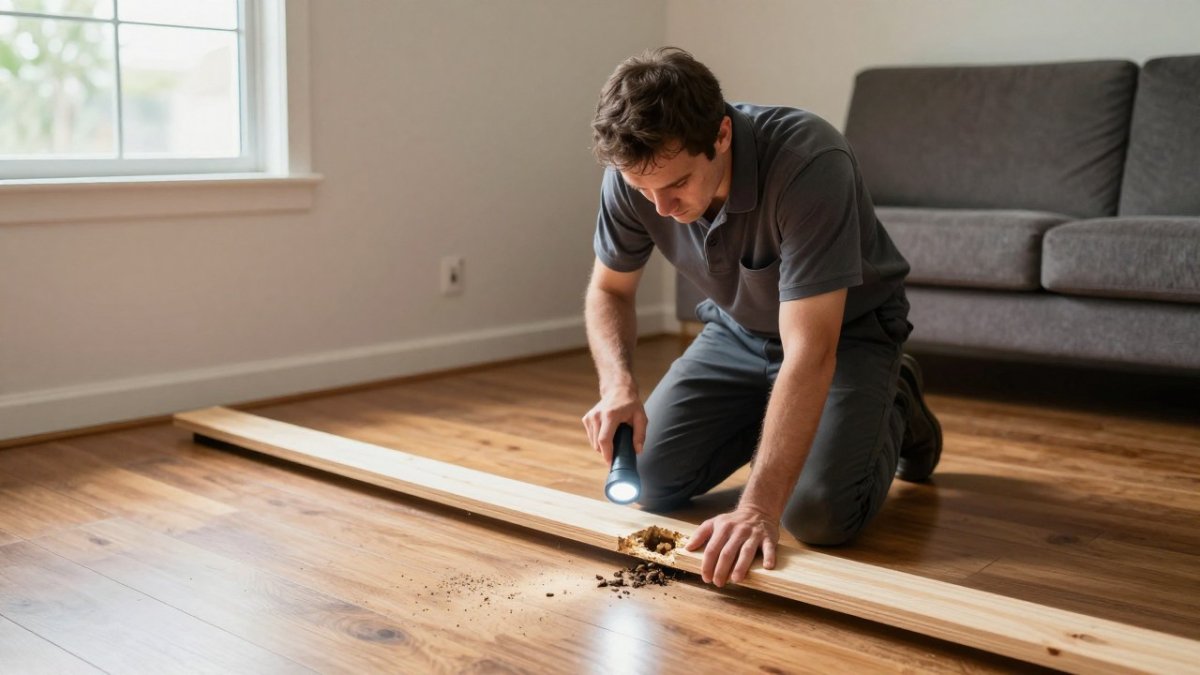
Tap structural timber with the handle of a screwdriver. Solid timber gives a sharp knock; hollow or soft timber sounds dull and may give slightly under pressure. Pay attention to door frames, architraves, skirting boards and any timber touching soil. Termites eat from within, so a sound outer skin can hide a hollow core.
What Termite Mud Tubes Look Like and Where to Find Them
Termite mud tubes look like narrow ridges of dried soil, roughly the width of a pencil, stuck to walls, piers, foundations and stumps. Fresh tubes are damp and dark; older ones crumble easily. They are the single most reliable visible evidence of termite activity in most homes, because subterranean termites need them to keep their bodies moist while travelling between the colony and a food source.
Not every tube is the same, and knowing the difference changes how urgently you act:
- Working tubes run from soil up to timber and are the ones termites use every day. They feel firm and slightly damp, and breaking one usually reveals live termites retreating or a repair crew of soldiers within days.
- Exploratory tubes branch out across masonry or along a slab edge looking for a way in. They can be thin and fragile, and they may be abandoned, but they still prove a colony is nearby.
- Drop tubes hang down from timber above, such as floor joists or a verandah beam, back to the soil. They are easy to miss because they sit in shadow under the house.
- Swarm tubes are short, blunt stubs built before a colony releases winged reproductives. Finding one means a mature colony is established.
Where to look, in order of how often we find them:
- Along the base of exterior brick or rendered walls, where the slab edge meets soil
- On piers and stumps under high-set homes, especially the shaded side
- In timber cracks, joints and the gap behind skirting boards
- Around concrete slab edges, weep holes and expansion joints
- Up the sides of trees and stumps near the house
- Behind garden edging, retaining walls and sleepers in contact with soil
A practical way to search is to work clockwise around the outside of the house at knee height, then again at head height, then repeat inside each room along the skirting line. Termites follow edges and shadows, so the corners, the back of built-in cupboards and the wall behind the hot water service are where tubes are most often found.
Watch out: a common mistake is assuming a single abandoned tube means the problem has gone. Termites often build exploratory leads and return later, and a tube that crumbles today can be rebuilt within a week.
Interior Warning Signs: Paint, Skirtings and Sticking Doors
Interior warning signs are where most Cairns homeowners first notice something is wrong. Paint that bubbles or blisters, skirting boards that crumble, and doors that suddenly stick are all classic indicators of termite damage inside the home.
Bubbling Paint, Blistered Linings and Mud Buildup
Bubbling or blistered paint and rippled or bulging wall linings can signal moisture and termite activity behind the surface. Termites push soil and frass into cracks and joints, so you may also see mud buildup in timber cracks, along cornices or behind power points. Press gently on a suspect area: if it gives or sounds papery, get it inspected.
Damaged Skirting Boards, Architraves and Frames
Damaged skirting boards and architraves often show up as fine ripples, small holes or timber that crumbles when touched. Sticking doors and windows are another red flag: termites eat the frame, the timber warps, and the door no longer closes cleanly. If a door that worked last month now scrapes, check the frame before you reach for the plane.
Termites in Concrete Slab Homes and Concealed Entry Points
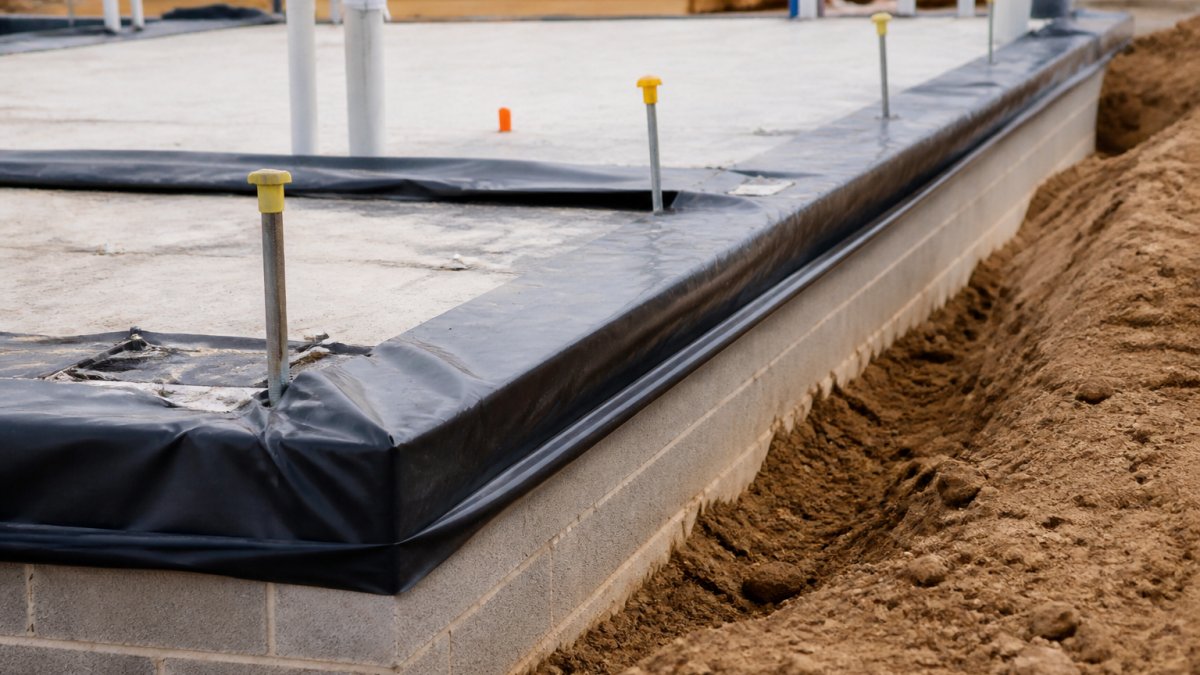
Termites in concrete slab homes enter through concealed routes that are almost impossible to see from the surface. Slab edges, expansion joints, service penetrations and the gap between the slab and wall framing all give termites a protected path into structural timber. Because there is no subfloor to inspect and no stumps to check, the damage can be well advanced before anything shows on the inside.
The routes worth understanding are consistent from home to home:
- The slab edge, where soil sits against the concrete and termites build tubes up the face and over the top into the bottom plate.
- Expansion and construction joints, which are designed to move and are rarely sealed against termites.
- Service penetrations for plumbing, electrical conduit and air-conditioning pipework, where the concrete is cut and the gap is often left open.
- The wall cavity, where a tube can travel up behind plasterboard or brick veneer to reach roof timbers without ever crossing a visible surface.
- Bathroom and laundry wet areas, where leaking taps, failed waterproofing and poor drainage keep the slab and bottom plates damp, which is exactly what termites seek.
- Garage and carport junctions, where the slab meets the house and where stored timber and cardboard sit against the wall.
This is why slab homes can carry significant concealed damage before a homeowner notices anything. The evidence usually shows up as bubbling paint, a hollow skirting board, a mud lead emerging at the slab edge, or a door that suddenly sticks because the frame has been eaten from the inside.
A visual walk-around cannot confirm or rule out termite activity in a slab home. A proper inspection relies on moisture meters to find damp zones, thermal imaging to detect temperature differences behind linings, and tapping and probing of timber that is accessible.
Watch out: assuming a slab home is termite-proof because there is no visible timber underneath. It is the opposite. Concealed entry points mean the risk is higher, not lower, and a quick look at the skirting boards is not an inspection.
Outdoor Evidence: Trees, Stumps and Slab Edges
Outdoor evidence is often the first thing a trained eye picks up. Termite activity around trees, stumps and slab edges tells you a colony is nearby and may already be working toward the house.
Check these areas:
- Trees with mud trails running up the trunk or soft, hollow timber at the base
- Old stumps and wood debris left near the house, which act as termite reservoirs
- The slab edge, where soil meets concrete, for fresh mud leads
- Fence posts, retaining walls and garden sleepers in contact with soil
- Mulch beds piled against the exterior wall
Removing wood debris and keeping soil away from the slab edge reduces termite risk, but it does not replace an inspection. If you find active mud trails outdoors, book a professional check rather than treating it yourself.
Wet Season Termite Activity and Seasonal Risk
Wet season termite activity ramps up because saturated soil and humid air let termites forage closer to the surface and stay active longer. In Cairns, the months of heavy rain are when new mud leads appear and swarmers are most likely to be seen.
Annual inspections matter more here than in drier climates. Moisture is the fuel, and a tropical wet season keeps moisture levels high for months. That is why we recommend scheduling an inspection before the wet season and checking again after it. Our guide on why annual termite inspections matter in FNQ explains the timing in more detail.
If you see winged termites or discarded wings near windows and light fittings, that is a swarmer event, not a sign to panic. It does mean termites are active nearby and an inspection is overdue.
Telling Termite Damage Apart from Lookalikes
Not every mark on your wall is termite damage. Distinguishing real evidence from lookalikes saves you money and worry, and it helps a professional focus on the right areas.
| What you see | Could be termite damage | More likely lookalike | How to tell |
|---|---|---|---|
| Bubbling paint | Yes, with moisture behind | Water leak or poor prep | Check for mud or frass under the blister |
| Hollow timber | Yes, common | Rot from damp | Termite galleries are clean; rot is soft and crumbly |
| Sticking door | Yes, frame damage | Swollen timber from humidity | Look for ripples and mud at the frame base |
| Mud on walls | Yes, strong indicator | Mud wasp nest or dirt splash | Termite tubes are narrow, uniform and follow edges |
| Small holes in timber | Yes, possible | Borer or furniture beetle | Termite holes often have mud packed around them |
A common mistake is treating mud wasp nests as termite tubes, or dismissing faint clicking noises in the wall as pipes. Faint clicking can indicate soldier termites tapping inside a colony. When in doubt, get it checked.
What to Do Immediately After Finding Suspected Damage
Do not spray, drill or disturb the area. The first step after finding suspected termite damage is to leave it intact and book a professional inspection, because disturbed termites scatter and make the problem harder to treat.
Here is the order we recommend:
- Take clear photos and note exactly where the evidence is
- Do not remove timber, mud tubes or damaged material
- Keep people and pets away from the area
- Book a licensed inspection to confirm activity and species
- Discuss treatment options once the report is in hand
Treatment is not one-size-fits-all. Chemical barriers, baiting systems and physical barriers suit different homes and situations, and you can compare termite treatment options to understand what is available before you decide. Acting quickly limits structural damage, but acting carelessly can make it worse.
Booking a Termite Inspection Cairns Homeowners Can Rely On
A professional termite inspection Cairns homeowners can trust goes beyond a visual walk-around. It covers the slab edge, subfloor, roof void, interior timber and outdoor risk zones, and it finishes with a written report you can act on.
Licensed technicians at Tropic Shield Pest Services hold a licence to carry out pest work and focus on the tropical climate of Far North Queensland.
When you are ready to act, you can book a thorough local termite inspection or request a free quote and speak to our team directly.
Termites rarely announce themselves. The homeowners who avoid serious damage are the ones who check, book and act early. Get started with Tropic Shield Pest Services and protect your home before hidden damage spreads.
Frequently Asked Questions
What are the first signs of termite damage in a home?
The earliest clues are usually mud tubes on walls, piers or stumps, timber that sounds hollow when tapped, and paint that bubbles or ripples without an obvious cause. Some homeowners notice doors or windows that suddenly stick. Because termites in Cairns work behind wall linings and slab edges, visible evidence often appears only after activity has been underway for some time. If you spot any of these signs, arrange a professional inspection rather than waiting to see whether the damage spreads.
What do termite mud tubes look like?
Termite mud tubes are narrow, earth-coloured tunnels of soil, saliva and timber debris, roughly the width of a pencil, running along foundations, piers, stumps and slab edges. They protect termites from dry air and predators as they travel between soil and timber. Break a small section open: live termites usually retreat quickly, while old tubes stay empty and crumble. Fresh, moist tubes are the ones worth reporting. Check the base of external walls and any timber touching the ground.
Can termites damage a concrete slab home?
Yes. Termites in concrete slab homes enter through expansion joints, plumbing penetrations, slab edges and cracks, then move through wall cavities to reach structural timber. Because there is no subfloor to inspect, damage often stays concealed until skirting boards soften or doors stop closing properly. Slab homes need a professional inspection that checks entry points around the perimeter and any concealed areas, not just a quick look at the visible timber.
What should you do if you find signs of termites?
Do not spray the area with household insecticide, and do not disturb the evidence further. Both can scatter the colony and make a proper assessment harder. Photograph what you have found, keep the area untouched, and book a licensed inspection. Early warning signs caught before structural timber is compromised usually mean less extensive treatment and repair. The sooner a technician assesses the activity, the more options you have.
How often should a home have a termite inspection?
In the tropical climate of Far North Queensland, an annual inspection is the practical minimum, and many homes benefit from one before each wet season when termite activity peaks. Properties with previous activity, older timber construction or extensive gardens may need more frequent checks. A professional inspection covers mud tubes, slab edges, roof voids and concealed entry points that homeowners cannot safely access. Regular checks are far cheaper than repairing structural damage.
Are flying termites a sign of an infestation?
Flying termites, called alates, swarm after rain to start new colonies. Seeing them outside near lights is common during the wet season and not necessarily a problem inside the home. Finding shed wings on windowsills or floors indoors, however, can indicate a colony within the building. Keep the wings for identification and arrange an inspection, because swarmers emerging inside usually means established activity nearby.